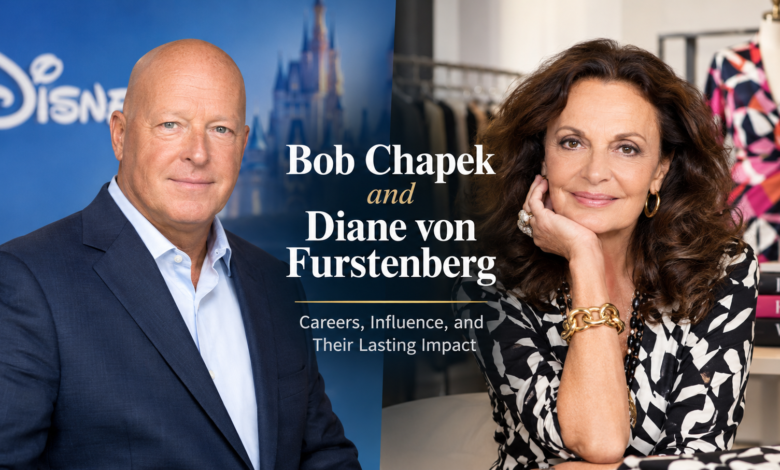
Bob Chapek and Diane von Furstenberg Remarkable Careers, Personal Lives & Business Influence 2026

Introduction
Bob Chapek and Diane von Furstenberg are two well-known names associated with leadership, creativity, and success in the business world. Although they built their careers in very different industries, both offer interesting examples of how professional decisions, personal ambition, and a clear vision can shape a person’s public reputation. Bob Chapek and Diane von Furstenberg became widely recognized for his executive leadership at The Walt Disney Company, while von Furstenberg established herself as an influential fashion designer and entrepreneur.
At first glance, their professional journeys may seem unrelated. One spent decades working within a global entertainment corporation, and the other built an internationally recognized fashion brand. However, their careers share several important themes, including brand development, adapting to changing markets, managing public expectations, and navigating the challenges that come with success.
Bob Chapek and Diane von Furstenberg s career provides insight into the complicated responsibilities of leading a major entertainment company. His experience illustrates how corporate strategy, financial performance, creative priorities, and employee relationships can influence an executive’s legacy. Diane von Furstenberg’s story, meanwhile, demonstrates how an original product idea can grow into a lasting business with cultural significance.
It is important to distinguish their individual achievements from any unverified claims about a personal or professional relationship between them. Their names may appear together in online searches, but that alone does not establish that they are relatives, business partners, or close personal acquaintances. Understanding their separate backgrounds provides a more reliable starting point.
This article explores Bob Chapek and Diane von Furstenberg and Diane von Furstenberg, examining their early lives, professional accomplishments, leadership styles, business philosophies, public reputations, and lasting influence. By looking at their experiences side by side, readers can better understand what makes their careers noteworthy and what lessons their professional journeys offer.
Who Is Bob Chapek?
Bob Chapek and Diane von Furstenberg is an American business executive best known for serving as chief executive officer of The Walt Disney Company. He spent many years working in different divisions of Disney before reaching its highest executive position. His experience included consumer products, theme parks, resorts, and other business operations that contributed to the company’s international reach.
Bob Chapek and Diane von Furstenberg career is notable because he developed much of his professional experience within one large organization. Rather than becoming famous through a single invention or creative project, he advanced through corporate leadership roles that required managing complex operations, coordinating teams, and making decisions affecting multiple markets.
Before becoming Disney’s CEO, Bob Chapek and Diane von Furstenberg held senior positions that connected the company’s entertainment properties with products and experiences for consumers. These responsibilities helped him understand how intellectual property could support merchandise, theme park attractions, and other commercial activities. Such work is especially important for a company whose characters and stories appear across numerous products and services.
In February 2020, Disney announced Bob Chapek and Diane von Furstenberg as its new chief executive, succeeding longtime CEO Bob Iger. The appointment came just as the COVID-19 pandemic began disrupting businesses worldwide. Consequently, Chapek entered the position during an extraordinary period when theme parks, theatrical releases, travel, and other important parts of Disney’s operations faced unprecedented uncertainty.
His tenure involved difficult decisions about reopening businesses, managing costs, distributing entertainment, and responding to rapidly changing consumer behavior. Disney also faced growing competition in streaming, an area that required substantial investment and presented challenges for traditional entertainment companies.
Bob Chapek and Diane von Furstenberg time as CEO ended in November 2022, when Disney announced that Bob Iger would return to the role. Although his tenure was relatively short, it remains an important chapter in Disney’s modern corporate history. His experience highlights the pressures facing executives who must balance immediate financial needs with long-term creative and strategic priorities.
Who Is Diane von Furstenberg?
Diane von Furstenberg is a Belgian-born American fashion designer, entrepreneur, author, and philanthropist. She is best known for creating the iconic wrap dress, a garment that became closely associated with modern women’s fashion during the 1970s. Her name has since become synonymous with independent style, confidence, and the development of a recognizable fashion identity.
Born Diane Simone Michele Halfin in Brussels, Belgium, in 1946, she grew up in a European environment before eventually establishing her career in the United States. Her early life and family background contributed to a broader perspective that later influenced her personal style and professional outlook.
Von Furstenberg entered the fashion industry at a time when women’s clothing was undergoing significant changes. More women were pursuing careers, participating in public life, and seeking clothing that could accommodate different activities without sacrificing style. Her designs responded to these changing preferences by combining practicality with a distinctive appearance.
The wrap dress became her signature creation because it was relatively easy to wear and adaptable to different occasions. Its flattering silhouette and simple fastening made it popular among women looking for comfortable yet polished clothing. The dress also became associated with the broader cultural movement toward women’s independence and self-expression.
Over time, von Furstenberg expanded her work beyond designing individual garments. She developed a fashion brand that included clothing, accessories, and other lifestyle products. Building a business around a recognizable name required more than creative talent; it also involved marketing, distribution, retail strategy, and maintaining a consistent brand identity.
Her influence extends beyond fashion. Von Furstenberg has supported initiatives related to women’s leadership and empowerment, including work through the DVF Awards and the Vital Voices organization. These efforts reflect her interest in helping women develop their leadership abilities and make meaningful contributions to their communities.
Bob Chapek’s Early Life and Education
Bob Chapek was born on August 21, 1960, in Hammond, Indiana, United States. His upbringing in the Midwest preceded a career that eventually placed him at the center of one of the world’s most recognizable entertainment companies. Although his professional achievements are well documented, many details of his private childhood have received less public attention.
Education played an important role in preparing Bob Chapek and Diane von Furstenberg for corporate leadership. He earned a bachelor’s degree in microbiology from Indiana University Bloomington. He later completed a Master of Business Administration degree at Michigan State University, giving him a combination of scientific education and business training.
This academic background is an interesting part of his professional story. A science degree does not automatically lead to a career in entertainment management, but it can develop analytical thinking, attention to detail, and a structured approach to solving problems. Business education, meanwhile, provides a foundation for understanding markets, organizations, and financial decisions.
Bob Chapek and Diane von Furstenberg move into business allowed him to apply these skills in a commercial environment. His later responsibilities required him to understand how products reach consumers, how companies manage large portfolios, and how different departments contribute to organizational performance.
His career demonstrates that executive leadership does not always follow a straightforward route from university to a single specialized profession. People can move between fields, acquire experience, and develop expertise through successive responsibilities. Bob Chapek and Diane von Furstenberg progression through Disney reflects this pattern.
His educational history also provides context for his management approach. As an executive, he became associated with operational execution, business performance, and commercial opportunities. These priorities are common in large organizations where leaders must coordinate complex systems while responding to financial and competitive pressures.
Diane von Furstenberg’s Early Life and Fashion Journey
Diane von Furstenberg was born on December 31, 1946, in Brussels, Belgium. Her mother, Liliane Nahmias, was a Holocaust survivor whose experiences became an important part of the family’s history. Von Furstenberg has spoken publicly about her mother’s strength and the influence her life had on her own understanding of resilience.
Her early years helped shape her outlook, but her eventual success was also the result of recognizing an opportunity in the fashion market. She developed an interest in clothing and design while building connections that eventually brought her into the fashion industry.
After marrying Prince Egon von Furstenberg in 1969, she became known publicly by the surname that would later define her fashion brand. The marriage connected her to European aristocratic circles, but her professional reputation ultimately developed through her own entrepreneurial activities rather than through her title alone.
She moved to New York and began developing her career as a designer during a period of considerable cultural change. The fashion industry was expanding, and women were looking for clothes that could transition between work, social activities, and everyday life. Von Furstenberg recognized the appeal of versatile garments that were both practical and fashionable.
Her wrap dress emerged as a defining product during the early 1970s. It offered a straightforward design that was easy to put on, comfortable to wear, and suitable for many different settings. The garment’s popularity helped her establish a strong identity in a competitive industry.
The growth of her brand was not without challenges. Fashion trends change quickly, and maintaining a business over several decades requires more than one successful product. Von Furstenberg’s ability to revisit her signature design, develop new collections, and remain involved in conversations about women’s leadership helped keep her name relevant across generations.
Bob Chapek’s Career at The Walt Disney Company
Bob Chapek and Diane von Furstenberg joined Disney in 1993 as a marketing executive in its home entertainment business. At the time, the company was already a major name in film and family entertainment, but the industry was beginning to experience important changes in how audiences purchased and watched movies. His early responsibilities placed him in a position to understand the commercial side of entertainment distribution.
During his career, Bob Chapek and Diane von Furstenberg held several senior positions, including president of Walt Disney Studios Home Entertainment. He worked on distribution strategies involving physical media and digital entertainment, areas that were important as consumers gradually changed their viewing habits. His experience helped him develop a broad understanding of how Disney could generate revenue from its film library beyond the initial theatrical release.
In 2011, Bob Chapek and Diane von Furstenberg became president of Disney Consumer Products. This role involved managing products connected to Disney’s entertainment properties, including toys, clothing, publishing, and other merchandise. Such operations require careful coordination between licensing, marketing, retail partners, and creative teams. A successful character or film can generate value across many different markets when its brand identity remains consistent.
Bob Chapek and Diane von Furstenberg later became chairman of Walt Disney Parks and Resorts in 2015 and chairman of Disney Parks, Experiences and Products in 2018. These roles expanded his responsibilities to include theme parks, cruise operations, vacation experiences, and consumer-facing businesses. His work involved managing major investments and ensuring that Disney’s experiences remained commercially successful while appealing to visitors from different countries.
His appointment as Disney CEO in February 2020 represented the culmination of nearly three decades of corporate experience. The company’s board selected him after considering internal and external candidates, emphasizing his familiarity with Disney’s different business divisions. However, taking responsibility for the entire corporation brought a different level of public scrutiny and strategic pressure.
Bob Chapek and Diane von Furstenberg career illustrates how executive advancement can depend on understanding an organization from several perspectives. His experience in distribution, merchandise, and parks gave him operational knowledge that was valuable to a diversified company. At the same time, his tenure as CEO demonstrated that success in individual divisions does not automatically make leading an entire global corporation straightforward.
Diane von Furstenberg’s Rise in the Fashion Industry
Diane von Furstenberg founded her fashion business in 1972, establishing the foundation for a brand that would become internationally recognizable. Her early collections helped her develop a distinctive visual identity, particularly through colorful prints and practical silhouettes. Rather than relying entirely on seasonal trends, she worked toward a style that customers could recognize as her own.
The wrap dress became her defining achievement in 1974. Its design combined a fitted shape with a wraparound closure, allowing the wearer to adjust the garment comfortably. The style offered an alternative to more complicated clothing and suited the changing lifestyles of women who wanted versatile outfits for work, travel, and social occasions.
The commercial response was remarkable. According to the designer’s official biography, she had sold more than one million wrap dresses by 1976. Media attention helped establish her as one of the most recognizable figures in American fashion, while the garment itself became associated with confidence and independence. The success demonstrated how a simple design could meet a widespread consumer need.
However, von Furstenberg’s career was not simply a story of immediate success followed by uninterrupted growth. Like many fashion entrepreneurs, she experienced changing market conditions and business challenges. A signature product can establish a brand, but sustaining that brand requires continued creativity, commercial discipline, and an understanding of what customers want.
In 1997, she relaunched the DVF brand, returning renewed attention to her signature style and expanding the business’s modern identity. This comeback demonstrated the value of reconnecting with an established product while presenting it to a new generation. Her experience also showed that a brand’s history can become an advantage when its founder understands how to reinterpret that history for contemporary customers.
Over the following years, von Furstenberg became more than a designer associated with one famous dress. She developed a broader lifestyle brand and continued participating in industry leadership. Her work with the Council of Fashion Designers of America and her support for emerging women leaders strengthened her reputation beyond commercial fashion. Her career demonstrates how a creative idea can evolve into a business legacy when it remains connected to a recognizable purpose.
Leadership Styles and Business Philosophies
Bob Chapek and Diane von Furstenberg represent two different approaches to professional leadership. Bob Chapek and Diane von Furstenberg career developed within a large corporate structure, where operational efficiency, financial results, and coordination across business divisions were important. Von Furstenberg built her reputation through design, entrepreneurship, and the development of a personal brand. Their different backgrounds show that leadership can take many forms.
Bob Chapek and Diane von Furstenberg responsibilities required him to oversee operations involving thousands of employees, international markets, and substantial investments. Decisions about theme parks, distribution, consumer products, and streaming could affect different departments in different ways. Corporate leadership therefore required him to consider immediate business needs alongside the long-term value of Disney’s intellectual property and customer relationships.
Von Furstenberg’s approach developed from the relationship between fashion, identity, and entrepreneurship. Her work depended on understanding how people wanted to look and feel, then turning those preferences into commercially appealing products. The wrap dress succeeded partly because it offered a practical solution while communicating a broader message about personal confidence.
Both careers demonstrate the importance of brand recognition. Disney’s value depends partly on audiences’ emotional connections with its stories, characters, and experiences. DVF’s identity has similarly relied on recognizable patterns, silhouettes, and associations with independent style. In both cases, a brand becomes more powerful when consumers understand what it represents.
Their experiences also reveal different challenges in maintaining a public-facing business. A large entertainment company must satisfy shareholders, employees, customers, creative professionals, and regulators. A fashion brand must respond to changing tastes, retail conditions, production costs, and competition. Both environments require decision-makers to adapt without losing sight of the organization’s identity.
One useful lesson is that leadership cannot be evaluated through a single measure. Revenue growth, creative achievement, customer satisfaction, workplace culture, and long-term reputation can all influence how a leader is judged. Bob Chapek and Diane von Furstenberg tenure attracted debate about corporate strategy and leadership decisions, while von Furstenberg’s legacy reflects a combination of commercial accomplishment and cultural influence. Comparing them reminds us that successful leadership involves more than reaching a prominent position.
Bob Chapek and Diane von Furstenberg: Personal Lives and Public Images
Although Bob Chapek and Diane von Furstenberg are both public figures, their personal lives have received different kinds of attention. Bob Chapek and Diane von Furstenberg became widely known through corporate leadership and his position at Disney. Von Furstenberg developed a public identity that combines fashion, entrepreneurship, family history, philanthropy, and personal expression.
Bob Chapek and Diane von Furstenberg has generally been discussed in the media in connection with his executive responsibilities. His professional decisions, relationships within Disney, and handling of difficult business circumstances have attracted attention because of the company’s global importance. His personal life, by comparison, has remained less central to his public reputation.
Von Furstenberg’s personal history has played a more visible role in her public story. Her mother survived the Holocaust, and the designer has discussed how her mother’s resilience influenced her own outlook. These family experiences provide important context for understanding why confidence, independence, and the ability to recover from difficulties appear frequently in discussions of her life and work.
Von Furstenberg has also spoken about the relationship between personal identity and professional independence. Her fashion career developed during a period when women’s social and economic roles were changing. The wrap dress became associated with that cultural moment, giving her brand a meaning that extended beyond clothing.
Both figures have experienced the pressures that accompany public recognition. Corporate executives are often evaluated through the performance of the organizations they lead, while designers may face expectations about creativity, personal style, and commercial success. Public attention can create opportunities, but it can also make professional setbacks more visible and difficult to manage privately.
It is important, however, not to assume that two well-known people share a personal connection simply because their names appear together in an online search. Their biographies establish separate careers in entertainment management and fashion. Without reliable evidence, claims that they are relatives, close friends, romantic partners, or business collaborators should not be presented as facts.
Public Challenges, Career Changes, and Professional Legacy
Bob Chapek and Diane von Furstenberg tenure as Disney CEO was shaped heavily by the COVID-19 pandemic. He took office in February 2020, just as the crisis began affecting travel, public gatherings, film production, and entertainment consumption. Disney’s theme parks and cruise operations faced extraordinary disruption, forcing the company to reconsider staffing, operating procedures, and financial priorities.
The pandemic also accelerated changes in the entertainment industry. Streaming services were becoming increasingly important, and companies had to reconsider how they released and monetized content. Disney had already invested in direct-to-consumer distribution, but the changing market created new questions about subscription growth, profitability, and the relationship between streaming and traditional theatrical releases.
Bob Chapek and Diane von Furstenberg leadership also encountered public disagreements and criticism during his time in office. Disney’s corporate decisions were closely watched by investors, employees, audiences, and political figures. In a company built around storytelling and family entertainment, decisions involving public controversies could affect its reputation well beyond the immediate business issue.
In November 2022, Disney announced that Bob Iger would return as chief executive, replacing Chapek. The change marked the end of Chapek’s approximately two-and-a-half-year tenure. It also highlighted the challenges of leadership succession at a company where creative direction, corporate strategy, and public expectations are closely connected.
Chapek’s career did not end with his departure from Disney. Reporting published in September 2026 describes his subsequent work advising businesses, his involvement with private equity, and his interest in additional board and investment opportunities. His professional life therefore offers a useful reminder that a high-profile executive departure does not necessarily mean the end of a business career.
Diane von Furstenberg’s professional legacy has followed a different path. Her fashion business has experienced its own commercial challenges, but the designer has remained a prominent figure in fashion and philanthropy. Her career demonstrates how an entrepreneur can maintain relevance through reinvention, continued engagement with an established brand, and a willingness to acknowledge the changing needs of an audience.
Diane von Furstenberg’s Philanthropy and Cultural Influence
Diane von Furstenberg’s influence extends beyond the fashion industry because she has used her public platform to support women and encourage leadership. Her philanthropic work reflects a belief that professional success can create opportunities to help others. This aspect of her career has become an important part of her public identity.
One of her best-known initiatives is the DVF Awards, established in 2010 with the Diller-von Furstenberg Family Foundation. The awards recognize women who demonstrate courage, resilience, and leadership while working to improve the lives of others. They also provide grants to support the recipients’ nonprofit organizations, helping turn recognition into practical assistance.
The initiative has recognized women working across a wide range of issues, including gender equality, environmental challenges, immigration, and violence prevention. This range demonstrates that von Furstenberg’s understanding of empowerment extends beyond the fashion industry. It includes women working in communities, public service, advocacy, and humanitarian efforts.
Her involvement with Vital Voices further connects her to efforts supporting women leaders around the world. The organization works to strengthen women’s leadership and advance their participation in addressing social and economic challenges. Von Furstenberg’s board involvement reflects her continuing engagement with this broader mission.
She has also contributed to the fashion industry’s institutional development. Her work with the Council of Fashion Designers of America included serving as its president and later chairwoman. These roles placed her in a position to support designers and contribute to conversations about the future of American fashion. Her influence therefore reaches beyond the products sold under her own name.
Von Furstenberg’s cultural influence is also reflected in documentaries, exhibitions, books, and public discussions of her life. These projects examine how her designs became connected with changing ideas about women’s independence and identity. Her story continues to attract interest because it combines a recognizable fashion innovation with entrepreneurship, personal resilience, and a commitment to supporting other women.
What Can We Learn From Bob Chapek and Diane von Furstenberg?
One important lesson from their careers is the value of understanding your industry. Chapek spent decades learning how Disney’s business divisions operated before becoming CEO. Von Furstenberg developed her fashion career by identifying a product opportunity and building a recognizable brand around it. Their experiences suggest that expertise often develops through sustained work rather than overnight success.
Another lesson is the importance of adapting to change. Chapek faced a global pandemic that transformed the entertainment and travel industries. Von Furstenberg had to navigate changing fashion preferences and the commercial difficulties that can affect even established designers. Both examples show that previous success does not eliminate the need to respond to new conditions.
Their stories also illustrate the difference between a product and a brand. A successful product meets a particular need, but a strong brand creates a broader association in consumers’ minds. Disney connects entertainment properties with experiences, merchandise, and storytelling, while DVF connects clothing with distinctive design and personal confidence. That connection can become an important competitive advantage.
A fourth lesson concerns public reputation. Senior executives and famous entrepreneurs operate under considerable scrutiny, and their decisions can influence how their achievements are remembered. Chapek’s time at Disney shows how leadership transitions and corporate challenges can shape a professional legacy. Von Furstenberg’s career demonstrates how commercial success, cultural relevance, and philanthropy can reinforce one another.
Their careers also highlight the importance of balancing short-term results with long-term objectives. Businesses need financial discipline, but they must also protect the qualities that make customers care about them. In entertainment, those qualities include compelling stories and memorable experiences. In fashion, they may include distinctive design, quality, and an emotional connection with the customer.
Finally, both careers show that professional success can take different forms. Chapek’s experience centers on corporate management and operational leadership, while von Furstenberg’s influence combines creative entrepreneurship with philanthropy. Neither path is a universal model for success. Instead, each offers lessons about developing expertise, making decisions under pressure, and creating value within a particular industry.
Frequently Asked Questions About Bob Chapek and Diane von Furstenberg
Are Bob Chapek and Diane von Furstenberg related?
There is no reliable evidence in the biographical sources discussed here establishing that Bob Chapek and Diane von Furstenberg are related. Their names refer to two different public figures whose careers developed in entertainment management and fashion, respectively. A shared search phrase does not establish a family relationship.
Did Bob Chapek and Diane von Furstenberg work together?
Their established biographies do not demonstrate a specific business partnership or a significant professional collaboration between them. Chapek’s career was primarily associated with Disney’s corporate operations, while von Furstenberg built her own fashion business and supported philanthropic initiatives. Any claim that they worked together would require additional reliable evidence.
What is Bob Chapek best known for?
Bob Chapek is best known for serving as CEO of The Walt Disney Company from February 2020 until November 2022. Before becoming CEO, he held several senior positions at Disney, including leadership roles in consumer products, studio distribution, and theme parks. His tenure as chief executive coincided with the COVID-19 pandemic and major changes in the entertainment industry.
What made Diane von Furstenberg famous?
Diane von Furstenberg became internationally recognized for introducing the iconic wrap dress in 1974. The design combined practicality with a distinctive silhouette and became associated with women’s independence and modern style. She subsequently developed a global fashion brand and became involved in philanthropy and women’s leadership initiatives.
What is Diane von Furstenberg doing beyond fashion?
Beyond her design work, von Furstenberg has supported women leaders through the DVF Awards and her involvement with Vital Voices. She has also participated in fashion industry leadership and authored books about her experiences and outlook. These activities form an important part of her continuing public influence.
What is the main difference between their careers?
The central difference is their professional focus. Chapek built his career in corporate management, helping oversee a large entertainment company with operations across several industries. Von Furstenberg built her reputation through fashion design, entrepreneurship, brand development, and philanthropy. Their experiences demonstrate different ways to establish a lasting professional identity.
Conclusion
Bob Chapek and Diane von Furstenberg offer two distinct perspectives on achievement, leadership, and professional influence. Chapek’s career demonstrates the complexity of managing a global entertainment business, particularly during a period of unprecedented disruption. His experience at Disney highlights the challenges executives face when balancing financial performance, operational demands, creative priorities, and public expectations.
Von Furstenberg’s journey shows how a creative idea can become a recognizable international brand. Her wrap dress helped establish her reputation, but her longer-term influence also reflects entrepreneurship, reinvention, and support for women leaders. Her work demonstrates that a professional legacy can extend beyond commercial products to include cultural contributions and philanthropy.
Although their industries and professional experiences differ considerably, both stories offer useful lessons about adaptability, brand identity, and the responsibilities that accompany public success. They also show why professional reputations should be assessed through documented achievements rather than assumptions or unsupported personal connections.
Ultimately, the connection between Bob Chapek and Diane von Furstenberg is best understood as a comparison between two notable careers, not as evidence of a confirmed personal relationship. Their individual journeys provide plenty of meaningful material for readers interested in business leadership, entrepreneurship, fashion, and the many different ways people build lasting influence.