
Henrik Fisker and Greg Hayes Two Business Leaders With Different Paths to Success

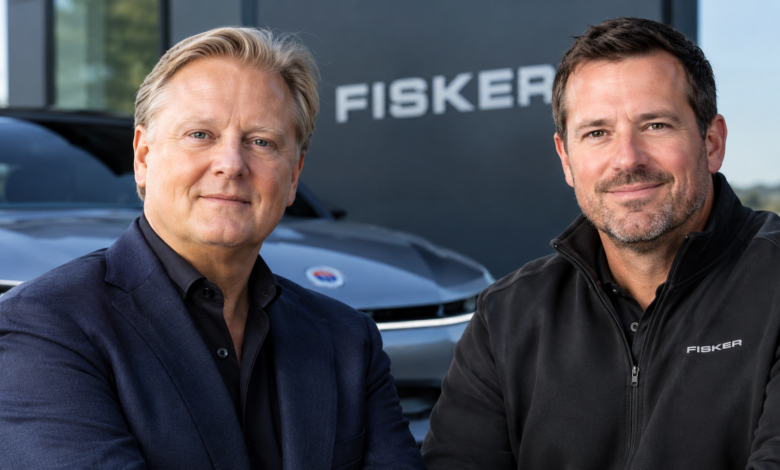
Henrik Fisker and Greg Hayes The business world is shaped by people who know how to recognize opportunities, manage challenges, and turn ambitious ideas into reality. Some leaders become famous for creating innovative products, while others earn recognition for managing large corporations and transforming established industries. Henrik Fisker and Greg Hayes represent two different examples of these leadership styles.
Henrik Fisker is widely recognized as an automotive designer and entrepreneur whose creative vision helped introduce distinctive luxury vehicles and electric cars. His work has been associated with major automotive names, including BMW and Aston Martin. Later, he established his own automotive companies and pursued the ambitious goal of making electric vehicles more attractive to everyday consumers.
Greg Hayes, on the other hand, built his reputation in corporate finance, industrial management, and aerospace leadership. He spent decades working at United Technologies Corporation before becoming a leading executive at RTX Corporation, formerly known as Raytheon Technologies. His career involved major acquisitions, corporate restructuring, and decisions that influenced the direction of the aerospace and defense industries.
Although their professional backgrounds are very different, examining Henrik Fisker and Greg Hayes together provides an interesting perspective on modern business leadership. Both demonstrate how strategic decisions, industry knowledge, and long-term ambitions can influence major companies.
It is important to clarify that there is no established public evidence that the two men are relatives, business partners, or direct professional collaborators. Their connection is best understood as a comparison between two influential business figures working in different industries.
This article explores their backgrounds, professional achievements, leadership approaches, business challenges, and wider influence while separating documented facts from assumptions.
At a Glance: Henrik Fisker and Greg Hayes
| Category | Henrik Fisker | Greg Hayes |
|---|---|---|
| Profession | Automotive designer and entrepreneur | Business executive |
| Main industry | Automotive and electric vehicles | Aerospace and defense |
| Known for | Fisker Automotive and Fisker Inc. | United Technologies and RTX |
| Education | ArtCenter College of Design | Purdue University |
| Leadership background | Product design and entrepreneurship | Finance and corporate management |
| Notable achievement | Designing iconic luxury vehicles | Leading major corporate transformations |
Who Is Henrik Fisker?
Henrik Fisker is a Danish-born automotive designer and entrepreneur who became known for creating some of the most recognizable luxury vehicle designs of his generation. His professional journey demonstrates how creativity and engineering can work together to influence an entire industry. Rather than following a traditional corporate career, Fisker developed his reputation through design studios, established automakers, and independent business ventures.
Fisker developed an interest in automobile design at an early age. He eventually studied at the ArtCenter College of Design, where he developed the technical and creative skills needed to enter the competitive automotive industry. His education provided a foundation for understanding vehicle proportions, exterior styling, interior design, and the relationship between appearance and engineering.
One of the important early steps in his career was joining BMW’s advanced design operations in Germany. Working with an internationally respected manufacturer gave him opportunities to develop his abilities alongside experienced automotive professionals. His work contributed to the development of distinctive vehicle concepts and helped establish his reputation as a talented designer.
His career took another major step when he became president and chief executive officer of BMW DesignworksUSA in 2001. This position allowed him to work on creative projects beyond ordinary vehicle styling. He gained experience managing design teams, developing concepts, and understanding how major automotive companies approach product development.
Fisker later became particularly associated with Aston Martin. During his time with the British luxury automaker, he contributed to the design of vehicles such as the DB9 and V8 Vantage. These models helped reinforce Aston Martin’s reputation for combining elegant styling with powerful performance. His experience at the company became an important part of his professional identity.
His success as a designer eventually encouraged him to pursue entrepreneurship. Instead of creating vehicles for established manufacturers, he wanted to develop automobiles under his own brand. This ambition eventually led to the creation of Fisker Automotive, followed years later by Henrik Fisker and Greg Hayes Inc. His journey illustrates both the opportunities and financial difficulties associated with building an automotive company from the ground up.
Henrik Fisker’s Automotive Career and Business Achievements
Henrik Fisker’s entrepreneurial career became particularly visible in 2007 when he co-founded Fisker Automotive. The company aimed to introduce premium vehicles that combined attractive design with environmentally conscious technology. At the time, electric and hybrid vehicles were attracting increasing attention, but the luxury automotive market still offered relatively few alternatives.
One of the company’s most recognizable products was the Henrik Fisker and Greg Hayes Karma. This luxury plug-in hybrid vehicle attracted attention because of its dramatic exterior styling and advanced technology. It demonstrated Fisker’s belief that environmentally conscious automobiles did not need to look ordinary or sacrifice visual appeal. The Karma became an important milestone in the development of premium electrified vehicles.
The vehicle also included several distinctive features that helped separate it from traditional luxury cars. Its design incorporated a long body, a sophisticated interior, and a solar roof concept. These features reflected Fisker’s interest in combining sustainability with a premium driving experience. The Karma received considerable media attention after its introduction.
However, Henrik Fisker and Greg Hayes Automotive experienced serious financial and operational difficulties. Automotive manufacturing requires substantial investment, reliable suppliers, advanced engineering, and carefully managed production schedules. The company struggled with several of these challenges, while the loss of battery supplier A123 Systems created additional problems. These circumstances contributed to the company’s financial difficulties and eventual bankruptcy proceedings.
Following the collapse of Fisker Automotive, Henrik Fisker continued exploring opportunities in vehicle design and manufacturing. He remained interested in developing electric vehicles and believed that improvements in technology and production partnerships could create a more sustainable business model. His experience with the first company provided valuable lessons about the financial demands of automotive entrepreneurship.
In 2016, Fisker founded another company, Fisker Inc., with a renewed ambition to compete in the electric vehicle market. This business focused on designing modern electric cars and using outside manufacturing partnerships to reduce some of the costs associated with traditional automotive production. The company introduced several ambitious vehicle concepts, including the Fisker Ocean SUV. Nevertheless, Henrik Fisker and Greg Hayes Inc. ultimately filed for Chapter 11 bankruptcy protection in June 2024 after facing production, financial, and operational difficulties.
Who Is Greg Hayes?
Gregory J. Hayes, commonly known as Greg Hayes, is an American business executive recognized for his leadership in the aerospace, industrial, and defense sectors. Unlike Henrik Fisker, whose professional identity developed around automotive design and entrepreneurship, Hayes built his reputation through finance, corporate management, and large-scale business transformations.
Hayes attended Purdue University, where he earned a bachelor’s degree in economics. His academic background helped prepare him for a career involving financial management, corporate planning, and strategic decision-making. He also became a Certified Public Accountant, strengthening his professional experience in financial operations and business administration.
He began building his corporate career at United Technologies Corporation, commonly known as UTC. The company operated across several important industrial markets, including aerospace systems, building technologies, and aircraft engines. Working within such a large organization provided Hayes with opportunities to understand complex corporate structures and international business operations.
During his nearly 21-year career at UTC, Hayes held several senior positions involving finance, strategy, and business development. These responsibilities gave him experience in managing financial performance, evaluating investment opportunities, and supporting long-term corporate objectives. His growing influence eventually positioned him for the company’s highest leadership roles.
In 2014, Hayes became chief executive officer of United Technologies Corporation. He later became chairman in 2016. His leadership period was particularly important because the company underwent major structural changes. Rather than maintaining a broad collection of industrial businesses, UTC increasingly focused its operations on aerospace and related technologies.
Hayes became one of the most recognizable corporate leaders in the aerospace industry. His professional achievements were associated with large acquisitions, business separations, and strategic decisions designed to strengthen the company’s competitive position. His career demonstrates how financial knowledge and organizational leadership can influence businesses operating on a global scale.
Greg Hayes and His Major Corporate Achievements
One of the defining aspects of Greg Hayes’s career was his role in transforming United Technologies Corporation. When he became CEO, the organization operated across several different industries. Managing such a broad business portfolio required careful financial planning and a clear understanding of which operations offered the strongest long-term opportunities.
A major step in this transformation involved the sale of Sikorsky Aircraft in 2015. Sikorsky was an important helicopter manufacturer, but the transaction formed part of a wider strategy to reshape UTC’s business portfolio. The decision demonstrated Hayes’s willingness to make significant changes rather than simply maintaining the company’s existing structure.
Another major development was UTC’s acquisition of Rockwell Collins in 2018. This transaction strengthened the company’s position in aerospace systems, aircraft electronics, and related technologies. The acquisition was strategically important because it brought together businesses with complementary capabilities and expanded UTC’s presence in the global aviation market.
Hayes also oversaw the separation of Otis Elevator Company and Carrier Corporation in 2020. Both businesses had established positions in their respective markets, but operating independently offered opportunities for more focused management. These separations allowed UTC to concentrate more directly on its aerospace operations.
Perhaps the most significant corporate development during this period was the merger between United Technologies’ remaining aerospace businesses and Raytheon Company. Completed in 2020, the transaction created Raytheon Technologies, which was later renamed RTX Corporation. The combination brought together important aerospace and defense businesses, including Pratt & Whitney and Collins Aerospace.
Through these changes, Hayes helped reshape a major industrial conglomerate into a more focused aerospace and defense organization. His work involved balancing shareholder interests, employee responsibilities, technological investment, and long-term competitiveness. These achievements established his reputation as an executive capable of managing complicated corporate transformations.
Henrik Fisker and Greg Hayes: Comparing Their Leadership Styles
Henrik Fisker and Greg Hayes represent two different approaches to business leadership. Fisker’s professional identity is strongly connected to creativity, product development, and entrepreneurship. Hayes is more closely associated with financial discipline, corporate restructuring, and managing established international organizations. Their differences make their careers interesting to examine together.
Fisker’s leadership approach placed considerable emphasis on design and product differentiation. He believed that customers should feel emotionally connected to the vehicles they purchase. This philosophy influenced his work with luxury automobiles and electric vehicles. His goal was not simply to produce transportation but to create products that could stand out through appearance, technology, and sustainability.
Hayes approached leadership from a broader corporate perspective. His responsibilities involved overseeing complex operations, evaluating business portfolios, and making decisions affecting thousands of employees. Instead of focusing on a single product, he had to consider entire business divisions, financial performance, market competition, and long-term organizational stability.
Risk also played a different role in their professional journeys. Henrik Fisker and Greg Hayes repeatedly pursued ambitious entrepreneurial projects in an industry that requires enormous financial investment. Starting an automobile company involves challenges that can overwhelm even experienced businesspeople. His willingness to pursue these projects demonstrated considerable ambition, although the results also revealed the risks of insufficient financial and operational stability.
Hayes’s career involved risk management on a different scale. Major acquisitions and corporate restructuring can create substantial financial and organizational challenges. His role required evaluating the potential benefits of transactions while considering their long-term effects on the company. These responsibilities demanded a careful balance between ambition and financial discipline.
Another important difference involves their relationship with established businesses. Henrik Fisker and Greg Hayes often attempted to challenge traditional automotive approaches by developing new brands and vehicle concepts. Hayes worked within established corporate organizations and changed their structures to improve strategic focus. Both approaches can create value, but they require different skills and management priorities.
Despite these differences, both careers highlight the importance of understanding an industry’s future direction. Henrik Fisker and Greg Hayes recognized the growing interest in electric mobility and premium vehicle design. Hayes focused on the importance of aerospace technology, industrial consolidation, and business efficiency. Their experiences show that successful leadership can take many forms depending on the market, organization, and objectives involved.
Is There a Professional or Personal Connection Between Henrik Fisker and Greg Hayes?
The pairing of Henrik Fisker and Greg Hayes naturally raises questions about whether the two executives have worked together or share a personal relationship. Both have held prominent leadership positions, and their careers have involved major industrial organizations. However, sharing an interest in business and technology does not automatically establish a direct connection.
There is no reliable public documentation establishing that Henrik Fisker and Greg Hayes are relatives. Their biographies describe different professional backgrounds, educational experiences, and career paths. Fisker’s background is rooted in automotive design, while Hayes developed his career through finance and corporate leadership.
There is also no established public evidence identifying the two men as business partners. Fisker’s automotive ventures and Hayes’s leadership responsibilities at United Technologies and RTX developed within separate corporate environments. Their publicly documented professional histories do not establish a shared company or joint entrepreneurial project.
Their industries do, however, have some broader connections. Automotive and aerospace businesses both depend on advanced engineering, manufacturing expertise, supply chains, technological innovation, and substantial financial investment. Companies operating in these sectors must also manage safety requirements, regulatory obligations, and international competition.
Electric vehicles and aerospace technologies share certain technical interests, including battery development, lightweight materials, electronic systems, and energy efficiency. These areas create opportunities for technological developments to influence multiple industries. However, shared industry challenges should not be confused with evidence of a personal or professional relationship between individual executives.
The more useful way to understand their pairing is through comparison. Henrik Fisker represents the entrepreneurial and creative side of industrial innovation, while Greg Hayes represents large-scale corporate leadership and strategic transformation. Their careers offer different lessons about how business decisions shape important industries.
Business Challenges and Lessons From Their Careers
The careers of Henrik Fisker and Greg Hayes demonstrate that business success requires more than a promising idea. Companies need effective planning, financial resources, operational discipline, and the ability to respond to changing market conditions. These requirements become especially important in industries where products are expensive and development cycles are long.
Fisker’s experience provides a clear example of the challenges involved in launching an automotive business. Designing an attractive vehicle is only one part of the process. Manufacturers must also establish production facilities, negotiate supplier agreements, maintain quality standards, organize distribution, and provide customer support. Even a promising product can struggle if these operations are not properly coordinated.
The difficulties experienced by Fisker Automotive and Henrik Fisker and Greg Hayes Inc. also demonstrate the importance of financial sustainability. Companies cannot depend entirely on future sales expectations or investor enthusiasm. They need enough working capital to support development, manufacturing, marketing, and after-sales responsibilities. When financial pressure increases, even ambitious product plans can become difficult to execute.
Hayes’s experience offers another perspective on managing business challenges. Large corporations must constantly evaluate whether their existing structures remain competitive. Some business divisions may become less strategically important, while acquisitions can provide access to new technologies, customers, and markets. Making these decisions requires detailed analysis and strong management capabilities.
Corporate restructuring also comes with risks. Combining organizations can create differences in management cultures, systems, and operational priorities. Separating business divisions can also create temporary uncertainty for employees and customers. Hayes’s experience shows why major corporate transformations require planning, communication, and consistent execution.
Another lesson concerns the importance of long-term thinking. Business leaders must consider how decisions made today will affect their organizations several years later. Investing in new technologies, developing skilled employees, and maintaining strong customer relationships can help companies remain competitive. However, long-term strategies must also be supported by realistic financial assumptions.
Ultimately, their careers illustrate two essential elements of modern business: innovation and execution. Innovation creates opportunities, but execution turns those opportunities into sustainable results. Businesses need both capabilities if they want to remain successful over time.
Where Do Henrik Fisker and Greg Hayes Stand Today?
Henrik Fisker’s professional legacy remains closely connected to the automotive industry and the development of premium electric vehicles. His design work for established manufacturers helped build his reputation long before his independent companies entered the market. Even though his entrepreneurial ventures encountered major financial difficulties, his contributions to automotive styling remain an important part of his career.
Fisker Inc.’s bankruptcy in 2024 marked a major setback for the business. The company faced difficulties involving production, cash flow, customer deliveries, and vehicle-related issues. Its Chapter 11 proceedings resulted in the liquidation of important business assets and the sale of remaining vehicle inventory. The company’s difficulties also raised wider questions about the challenges facing new electric vehicle manufacturers.
Developments continued after the bankruptcy filing. In February 2026, TechCrunch reported that the Securities and Exchange Commission had closed its investigation into Henrik Fisker and Greg Hayes in September 2025. The closure was confirmed through information obtained following a Freedom of Information Act request. This development is an important part of the company’s more recent history, although the closure alone does not establish the findings or outcome of every issue associated with its bankruptcy.
Greg Hayes, meanwhile, moved into a different stage of his corporate career after his leadership period at RTX. According to Phillips 66’s corporate governance biography, he served as RTX’s executive chairman and special adviser through April 2025. He is also identified as the lead independent director of Phillips 66, where he serves on several board committees.
His career continues to demonstrate the value of experience in financial management and large-scale corporate strategy. The aerospace and defense industries remain important parts of the global economy, and the organizations he helped reshape continue to operate in highly competitive markets.
The difference between their current professional positions is significant. Fisker’s public profile is closely associated with the outcome of his entrepreneurial automotive ventures, while Hayes’s professional record is connected to corporate governance and board leadership. Both experiences provide useful examples of how business careers can evolve over time.
Their stories also demonstrate that a person’s professional reputation cannot always be measured by the success of a single company. Individual achievements, industry contributions, leadership decisions, and the ability to learn from difficult experiences all form part of a broader professional legacy.
The Lasting Influence of Henrik Fisker and Greg Hayes
Henrik Fisker influenced automotive design by demonstrating how luxury styling and electric mobility could work together. His designs helped challenge the traditional appearance of environmentally focused vehicles. The Fisker Karma, in particular, became an example of how electric and hybrid technology could be presented as an attractive luxury product rather than simply an alternative transportation solution.
His work at BMW and Aston Martin also remains an important part of his professional achievements. These experiences helped establish his reputation before he became an independent automotive entrepreneur. His contributions to recognizable vehicle designs demonstrate the long-term influence that talented designers can have on established brands.
Greg Hayes’s influence is more closely connected to corporate organization and industrial strategy. His leadership at United Technologies helped reshape the company’s business portfolio and establish the foundation for the organization now known as RTX. The acquisitions and separations he oversaw affected important aerospace and industrial businesses.
Hayes also demonstrated how financial knowledge can support strategic corporate decisions. Large organizations need executives who understand how investments, operational efficiency, and market positioning interact. His career illustrates the importance of managing financial resources while preparing companies for changing industry conditions.
Both men also demonstrate that leadership involves making difficult decisions. Fisker’s entrepreneurial ambitions required him to take considerable risks in pursuit of new automotive opportunities. Hayes’s corporate responsibilities involved restructuring major businesses and making decisions that affected employees, investors, and international operations.
Their professional journeys provide different but valuable perspectives on innovation and management. Fisker’s story highlights the creative possibilities and financial difficulties of entrepreneurship. Hayes’s story demonstrates how established corporations can change direction through strategic leadership and organizational restructuring.
Although Henrik Fisker and Greg Hayes do not have a documented direct partnership, their careers offer an interesting comparison. One pursued ambitious ideas through automotive design and electric vehicle entrepreneurship, while the other helped transform major industrial organizations. Together, their stories illustrate the different ways individuals can influence modern business and technology.
Frequently Asked Questions (FAQs)
1. Who is Henrik Fisker?
Henrik Fisker is a Danish-born automotive designer and entrepreneur known for his work with BMW, Aston Martin, Fisker Automotive, and Fisker Inc. He became particularly recognized for designing luxury vehicles and pursuing electric vehicle innovation.
2. Who is Greg Hayes?
Greg Hayes is an American corporate executive known for his leadership at United Technologies Corporation and RTX Corporation. He played an important role in major acquisitions, corporate restructuring, and the development of a more focused aerospace business.
3. Are Henrik Fisker and Greg Hayes related?
There is no reliable public evidence establishing that Henrik Fisker and Greg Hayes are related. Their professional and personal backgrounds are distinct.
4. Have Henrik Fisker and Greg Hayes worked together?
No publicly documented business partnership or direct professional collaboration between them has been established. They are more appropriately compared because of their leadership positions in different industrial sectors.
5. What is Henrik Fisker famous for?
Henrik Fisker is famous for designing vehicles such as the BMW Z8, Aston Martin DB9, and Aston Martin V8 Vantage. He also founded automotive companies focused on luxury and electric vehicles.
6. What is Greg Hayes known for?
Greg Hayes is best known for leading United Technologies Corporation and serving as chairman and CEO of RTX. His leadership involved major corporate transactions, including the Rockwell Collins acquisition and the merger that created Raytheon Technologies.
7. What happened to Fisker Inc.?
Fisker Inc. filed for Chapter 11 bankruptcy protection in June 2024 after experiencing financial, production, and operational difficulties. Its bankruptcy proceedings involved selling vehicle inventory and liquidating remaining assets.
8. What did Greg Hayes achieve at United Technologies?
Greg Hayes helped reshape United Technologies through acquisitions, business separations, and strategic restructuring. His leadership helped prepare the company’s aerospace businesses for their combination with Raytheon in 2020.
9. What industries are Henrik Fisker and Greg Hayes associated with?
Henrik Fisker is primarily associated with automotive design, luxury vehicles, and electric mobility. Greg Hayes is associated with aerospace, defense, industrial manufacturing, and corporate management.
10. Why are Henrik Fisker and Greg Hayes compared?
They can be compared because both held influential business leadership positions and made decisions that affected major industrial organizations. Their careers offer different perspectives on entrepreneurship, innovation, financial management, and corporate strategy.
Final Thoughts
Henrik Fisker and Greg Hayes have followed very different professional journeys, but both have influenced important areas of modern industry. Fisker’s career reflects creativity, automotive design, and the ambition to develop new electric vehicle businesses. Hayes’s experience demonstrates how financial expertise and strategic management can reshape large corporations.
Their stories also offer an important reminder that ambition alone does not guarantee business success. Strong ideas need practical execution, financial stability, reliable operations, and effective leadership. Whether someone is building an automotive startup or managing an international corporation, these principles remain essential.
Ultimately, Henrik Fisker and Greg Hayes represent two different sides of modern business leadership. Their professional experiences provide useful lessons about innovation, corporate responsibility, risk management, and the challenges of building lasting success.




2 Comments