
Tiger Woods and Bill Ackman Their Connection, Careers, Wealth, and Shared Link to Nike

Introduction
Tiger Woods and Bill Ackman are two influential American personalities who have made remarkable contributions to completely different industries. One transformed professional golf through extraordinary talent, discipline, and determination. The other became a prominent figure in global finance through investment strategies, business decisions, and a willingness to challenge major corporations. Although their professional journeys are very different, both have attracted worldwide attention for their achievements and influence.
Tiger Woods and Bill Ackman is widely regarded as one of the greatest golfers in history. His career includes 15 major championship victories, 82 PGA Tour wins, and numerous records that changed the sport. Beyond golf, Woods has developed a recognizable personal brand through endorsements, business ventures, golf course design, and charitable activities. His relationship with major companies helped establish a new standard for athlete marketing.
Bill Ackman, meanwhile, is an American billionaire investor and the founder of Pershing Square Capital Management. He is known for making concentrated investments in major publicly traded companies and publicly expressing his opinions about corporate leadership and business strategy. His investment decisions frequently attract attention from financial analysts, investors, and business journalists.
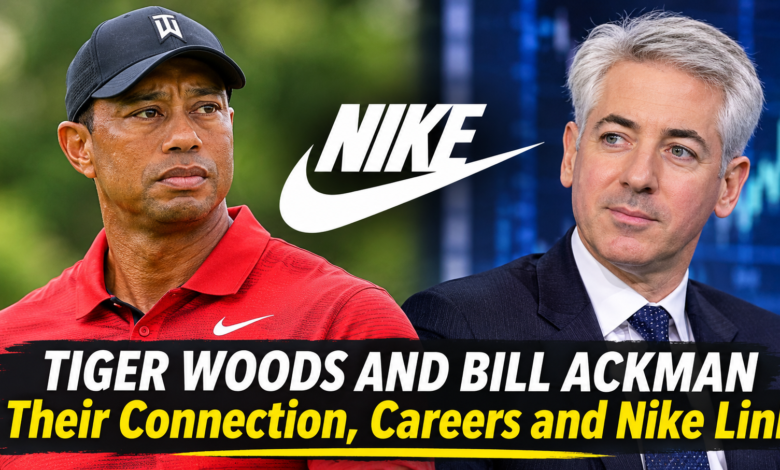
At first glance, these two personalities might not seem connected. TIGER Woods and Bill Ackman built his reputation on golf courses, while Ackman established his career in investment management. However, their professional stories intersect through one particularly recognizable company: Nike.
Woods spent more than two decades representing Nike as one of its most recognizable athletes. Ackman’s investment firm also developed a financial relationship with the sportswear giant through its share purchases. This shared corporate connection explains why people sometimes search for Tiger Woods and Bill Ackman together.
It is important to distinguish between a shared connection and an actual partnership. There is no publicly verified evidence establishing that Tiger Woods and Bill Ackman are close personal friends, relatives, or direct business partners. Their association is primarily connected to their separate professional relationships with Nike.
Understanding their individual backgrounds, professional achievements, business interests, and Nike connections provides a much clearer picture of why these two famous names appear together in online searches.
1. Who Is Tiger Woods? Understanding His Early Life and Background
Tiger Woods, whose full name is Eldrick Tont Woods, was born on December 30, 1975, in Cypress, California. His father, Earl Woods, played an important role in introducing him to golf at a very young age. His mother, Kultida Tiger Woods and Bill Ackman , also supported his development and helped create an environment where education, discipline, and personal development mattered.
Woods showed an unusual interest in golf during childhood. Unlike many children who discover sports during their teenage years, he began practicing while he was still very young. His father recognized his natural coordination and encouraged him to develop his abilities through consistent practice.
His early appearances attracted attention because of his impressive control over the golf club. Television appearances and junior competitions introduced audiences to a young player who could perform at a level far beyond his age group. These experiences helped establish the foundation of his future professional career.
Education also played an important role in his development. Tiger Woods and Bill Ackman attended Stanford University, where he continued competing in collegiate golf while studying economics. His university experience gave him an opportunity to develop both academically and athletically before making the decision to pursue professional golf.
In 1996, Tiger Woods and Bill Ackman turned professional, marking the beginning of a career that would eventually change the commercial and competitive landscape of golf. His arrival generated enormous interest because fans and commentators had already witnessed his success in amateur competitions. Expectations were high, but he quickly demonstrated that he could compete against experienced professionals.
His breakthrough came in 1997 when he won the Masters Tournament by a remarkable 12 strokes. At just 21 years old, he became the youngest Masters champion at that time. The victory was more than another sporting achievement. It introduced a new generation of viewers to professional golf and established Tiger Woods and Bill Ackman as an international sporting sensation.
2. Tiger Woods’ Professional Achievements and Influence on Golf
Tiger Woods and Bill Ackman professional career is filled with accomplishments that have influenced generations of golfers. His combination of technical skill, physical preparation, mental strength, and competitive confidence helped him dominate major tournaments. He became particularly famous for performing under pressure when other competitors struggled to maintain consistency.
His 1997 Masters victory remains one of the most memorable moments in golf history. Winning by 12 strokes demonstrated an extraordinary level of control and confidence. It also changed public expectations about what a young golfer could accomplish against experienced competitors.
Woods continued building his reputation throughout the early 2000s. Between 2000 and 2001, he completed what became known as the Tiger Slam by holding all four major championship titles simultaneously. Although the victories did not occur within one traditional calendar year, the achievement demonstrated his ability to dominate the sport across different courses and competitive conditions.
His major championship record includes five Masters victories, four PGA Championship titles, three U.S. Open victories, and three Open Championship wins. These 15 major championships place him second on the men’s all-time list, behind Jack Nicklaus, who won 18.
Another significant part of his career is his 82 PGA Tour victories. This achievement ties him with Sam Snead for the most official PGA Tour wins. Maintaining such a record requires exceptional consistency because professional golfers compete against highly skilled international opponents throughout the season.
Woods also influenced the physical and mental preparation of modern golfers. His athletic training, strength development, course management, and competitive mindset encouraged other professionals to take a more comprehensive approach to performance. Golf gradually became more associated with fitness and specialized preparation.
His influence extends beyond tournament results. Tiger Woods and Bill Ackman helped attract new audiences, increased the visibility of professional golf, and demonstrated how a successful athlete could become a global commercial brand. His career is therefore important not only because of the trophies he collected but also because of the broader changes he helped bring to the sport.
3. Who Is Bill Ackman? His Education, Early Life, and Business Background
Bill Ackman, whose full name is William Albert Ackman, was born on May 11, 1966, in Chappaqua, New York. He developed an interest in business, finance, and investment from an early stage. Over time, that interest became the foundation of a career that would make him one of the most recognizable investors in the United States.
Ackman attended Harvard College, where he earned a Bachelor of Arts degree magna cum laude. His academic journey continued at Harvard Business School, where he completed a Master of Business Administration. His education provided him with a strong understanding of financial markets, corporate strategy, business management, and investment analysis.
Before establishing his best-known investment company, Ackman co-founded Gotham Partners Management Company. The firm managed public and private equity investment portfolios. This early experience helped him understand how businesses operate, how companies are valued, and how investors can identify opportunities in competitive markets.
In 2003, Ackman founded Pershing Square Capital Management. The investment management firm became the central platform for his professional activities. Rather than spreading investments across hundreds of companies, his approach often involved selecting a relatively small number of businesses in which he believed there was significant long-term potential.
Ackman became particularly well known for activist investing. This approach involves purchasing meaningful stakes in companies and sometimes encouraging management teams or boards to make strategic changes. His investment activities have attracted attention because he is willing to discuss corporate performance, leadership decisions, and business challenges publicly.
Over the years, Ackman has become associated with major investment discussions involving companies across several industries. His career demonstrates how financial knowledge, patience, research, and strong opinions can influence the investment world. According to Pershing Square’s official biography, he founded the firm in 2003 and continues to serve as its chief executive officer. Pershing Square+1
4. Bill Ackman’s Investment Career and Financial Influence
Bill Ackman’s investment career is built around identifying businesses that he believes have strong long-term potential. His approach differs from strategies that focus primarily on short-term market movements. He often evaluates a company’s competitive advantages, financial structure, leadership, and ability to generate sustainable cash flow.
One characteristic that makes Ackman interesting to financial observers is his concentrated investment strategy. Instead of holding small positions in an extremely large number of businesses, Pershing Square has historically focused on a more limited portfolio. This approach can produce significant returns when investments perform well, although it also creates risks when individual companies experience difficulties.
Ackman has also developed a reputation for speaking openly about companies in which he invests. Activist investors sometimes encourage changes in management, operational efficiency, corporate governance, or long-term strategy. Ackman’s willingness to communicate his opinions has made him a recognizable figure beyond traditional financial circles.
His career has included investments and campaigns involving businesses such as Canadian Pacific, Chipotle, and other major companies. These activities have demonstrated his interest in businesses that have recognizable brands, established customer bases, and opportunities for operational improvement.
Another important aspect of his career is his ability to attract attention from investors and financial media. When Pershing Square announces a major investment, market participants frequently examine the reasoning behind the decision. Some investors follow his strategies closely, while others question the risks associated with concentrated portfolios and activist campaigns.
Ackman’s financial influence also extends into philanthropy. He established the Pershing Square Foundation in 2006, supporting charitable and social initiatives. This demonstrates that his activities are not limited to stock markets and corporate investments. His professional background provides an interesting contrast with Tiger Woods and Bill Ackman whose influence comes primarily from sports, endorsements, entrepreneurship, and charitable work.
5. The Nike Connection: How Tiger Woods and Bill Ackman Became Linked
The strongest publicly documented connection between Tiger Woods and Bill Ackman involves Nike. Although they approached the company from different professional directions, both became important parts of its wider commercial story. Tiger Woods and Bill Ackmanrepresented Nike as an internationally recognized athlete, while Ackman’s investment firm participated in the company through financial ownership.
Tiger Woods began his Nike relationship in 1996, shortly after turning professional. At that time, he was considered one of golf’s most exciting young talents. Nike recognized the opportunity to associate its brand with an athlete who could potentially influence the future of professional golf and sports marketing.
The partnership became one of the most recognizable endorsement relationships in professional sports. Tiger Woods and Bill Ackman wore Nike clothing during major tournaments, promoted its golf products, and helped develop the company’s identity in the golf market. His famous Sunday red outfit became closely associated with his competitive image.
Bill Ackman’s connection was different. Pershing Square purchased a stake in Nike during the fourth quarter of 2017. The investment was a financial decision involving Nike shares, not an endorsement agreement or a personal relationship with Tiger Woods and Bill Ackman . Pershing Square subsequently exited that initial position in 2018, according to contemporary financial reporting. Business Standard+1
The company attracted Pershing Square’s attention again in 2024. Regulatory investment disclosures reported that Ackman’s firm had established a new Nike position and increased it during the second half of that year. By the fourth quarter of 2024, the reported position had reached approximately 18.8 million shares. Investing.com+1
This overlap is particularly interesting because Woods and Ackman represented two different forms of commercial influence. Tiger Woods and Bill Ackman helped Nike connect with sports fans and golf consumers, while Ackman participated as an investor evaluating the company’s financial prospects. Their association with the same brand explains the search interest, but it does not establish that they personally worked together.
6. Why Tiger Woods’ Nike Partnership Was So Important
Tiger Woods’ partnership with Nike was much more than a typical athlete sponsorship. It became a long-running commercial relationship that helped connect one of golf’s greatest players with one of the world’s most recognizable sportswear brands. The agreement began in 1996 and lasted more than 27 years.
When Tiger Woods and Bill Ackman first joined Nike, the company was expanding its presence in golf. His arrival gave Nike an opportunity to introduce its products to an audience that followed professional tournaments closely. Woods’ popularity also helped make golf apparel more visible among younger sports fans.
The partnership became especially recognizable because of Tiger Woods and Bill Ackman ‘ tournament appearances. Fans frequently associated his Sunday red shirt and Nike logo with the pressure and excitement of final-round competition. This consistent visual identity helped make the relationship memorable across different generations of golf viewers.
Nike also developed products associated with Tiger Woods and Bill Ackman , including apparel carrying his TW branding. The relationship extended beyond traditional advertising because his professional career provided a continuous connection between the athlete and the brand. Major victories, memorable shots, and comeback performances all strengthened that association.
However, the partnership eventually reached its conclusion. On January 8, 2024, Tiger Woods and Bill Ackman publicly confirmed that his relationship with Nike had ended. Both sides expressed appreciation for their long association, which had lasted more than 27 years. PGA Tour+1
The ending of the relationship did not erase its commercial importance. Instead, it marked the conclusion of one of the most recognizable athlete-brand partnerships in sports history. For anyone researching Bill Ackman and Tiger Woods, this long Nike relationship provides essential context for understanding why their names sometimes appear together.
7. Did Bill Ackman Invest in Tiger Woods or His Businesses?
One question that frequently comes up when researching these personalities is whether Bill Ackman has ever invested directly in Tiger Woods. The question makes sense because both individuals have strong commercial reputations and their names are connected through Nike. However, the available public information does not establish a direct investment relationship between them.
Pershing Square’s Nike investment involved ownership of shares in Nike, Inc. Buying shares in a publicly traded company does not automatically create ownership in every athlete, employee, sponsor, or business associated with that company. This distinction is essential when discussing financial relationships.
Tiger Woods and Bill Ackman has developed several business interests under the broader TGR brand. These activities include golf course design, sports-related ventures, entertainment projects, and philanthropic initiatives. TGR brings together different parts of his professional identity outside competitive golf.
Woods has also been involved in developing new opportunities for the sport. One example is TMRW Sports, the company he co-founded with Rory McIlroy and Mike McCarley. The organization introduced TGL, a technology-focused team golf league designed to offer a different viewing experience.
Bill Ackman’s professional activities operate in another direction. His primary focus is investment management, corporate strategy, and the financial performance of businesses. His company, Pershing Square, evaluates investment opportunities and manages capital for investors.
Although both men have entrepreneurial interests, there is no reliable public evidence establishing that Ackman directly owns a stake in Woods’ TGR organization or that Tiger Woods and Bill Ackman has a formal investment role at Pershing Square. It is more accurate to describe their connection as indirect rather than suggest a partnership that has not been publicly confirmed.
8. Tiger Woods’ Business Ventures Beyond Professional Golf
Tiger Woods and Bill Ackman has gradually developed a business identity that extends well beyond winning golf tournaments. His success on the course created opportunities to work with major companies, launch commercial projects, and participate in different areas of the sports industry. These activities demonstrate how a professional athlete can build a lasting business presence.
One important part of his business portfolio is TGR. The organization brings together his entrepreneurial and philanthropic interests under one parent brand. Its activities reflect Tiger Woods and Bill Ackman ‘ interest in golf, education, technology, and creating opportunities for future generations. The organization’s official website describes Woods as its founder and chief executive officer. TGR
TGR Design is another significant venture. It focuses on golf course architecture and design. Tiger Woods and Bill Ackman has used his understanding of professional golf to contribute to course layouts that balance playing challenges, visual appeal, and the needs of different types of golfers.
Golf course design offers Tiger Woods and Bill Ackman a different way to influence the sport. Instead of competing directly against other professionals, he can contribute to the environments where future players develop their skills. It also allows him to remain connected to golf even when injuries limit his playing schedule.
Another important development is TMRW Sports. Tiger Woods and Bill Ackman and Rory McIlroy helped establish the organization to explore innovative approaches to sports entertainment. Its most recognizable project is TGL, a technology-focused golf league created in partnership with the PGA TOUR.
TGL combines traditional golf skills with advanced technology and a team-based competition format. Players compete in a purpose-built indoor venue, using large simulator screens and a specialized short-game area. Tiger Woods and Bill Ackman also became a player-owner of Jupiter Links Golf Club, demonstrating his interest in the business side of professional sports. PGA Tour+1
These ventures show that Tiger Woods and Bill Ackman ‘ ambitions are not limited to his tournament record. He has worked to create opportunities in sports entertainment, golf design, and education. This entrepreneurial approach is one reason his name remains relevant in business discussions, even when he is not competing in major tournaments.
9. Bill Ackman’s Business Philosophy and Approach to Long-Term Success
Bill Ackman’s investment philosophy provides an interesting contrast with Tiger Woods’ approach to professional competition. While Tiger Woods and Bill Ackman concentrates on improving his performance through practice and preparation, Ackman studies businesses to identify opportunities that may create value over extended periods.
A major part of Ackman’s strategy involves understanding a company’s underlying business model. Investors need to examine how a company generates revenue, what makes its products competitive, and whether its advantages can survive changing market conditions. Ackman’s investment approach places considerable importance on these factors.
He is also known for supporting businesses with recognizable brands and established market positions. Such companies may benefit from customer loyalty, distribution networks, pricing power, and other competitive advantages. However, a strong brand does not automatically make a company a good investment. Valuation and management decisions remain important.
Another characteristic of his approach is concentration. Rather than relying entirely on broad diversification, Pershing Square has historically maintained substantial positions in selected companies. This strategy can increase potential returns, but it can also magnify losses when an investment performs poorly.
Corporate governance is another area associated with Ackman’s work. Activist investors sometimes believe that a company could perform better with changes to its leadership, operations, or strategic direction. Ackman has used his public profile to communicate investment arguments and encourage corporate changes.
Long-term thinking is particularly relevant when comparing Ackman with Tiger Woods and Bill Ackman . Both careers demonstrate the value of preparation, consistency, and understanding the fundamentals of a profession. Woods studies courses, competitors, and his own performance, while Ackman examines companies, financial statements, and competitive environments. Their methods differ, but both operate in fields where decisions can have significant long-term consequences.
10. Tiger Woods and Bill Ackman: Similarities and Differences
Tiger Woods and Bill Ackman have built successful careers in different industries, but several characteristics make their professional stories interesting to compare. Both are internationally recognized American personalities who have influenced their respective fields through ambition, discipline, and a strong commitment to their work.
The first similarity is their ability to develop recognizable personal brands. Woods became a global sporting icon through tournament victories, endorsements, and his influence on golf. Ackman developed a powerful professional identity through investment decisions, corporate campaigns, interviews, and public financial commentary.
Another similarity is their willingness to operate under pressure. Professional golf requires players to perform while competing against some of the world’s best athletes. Investment management involves financial uncertainty, changing markets, and decisions that can affect billions of dollars in capital. Neither profession offers guaranteed success.
Their careers also demonstrate the importance of reputation. Woods’ achievements have made him a familiar name among sports fans, while Ackman’s investment record has made him a recognizable figure among financial professionals. Their reputations influence how audiences interpret their decisions and future projects.
However, their professional responsibilities are very different. Woods primarily works in professional sports, golf-related businesses, and philanthropy. Ackman concentrates on financial investments, corporate governance, and asset management. Their industries require different skills, professional networks, and measures of success.
Their relationships with Nike provide another interesting contrast. Woods was a long-term brand ambassador whose athletic performances helped shape Nike’s identity in golf. Ackman’s firm approached Nike as an investment opportunity, evaluating the company from a financial perspective rather than a sporting one.
Ultimately, their stories show that success can take many forms. Woods demonstrates the influence of athletic excellence and commercial partnerships, while Ackman illustrates the importance of investment research and business strategy. Their shared association with Nike connects their stories without making them professional partners.
11. Public Interest in Tiger Woods and Bill Ackman’s Relationship
Public interest in Tiger Woods and Bill Ackman comes from the unusual combination of sports, finance, and global branding. People searching for both names may be trying to understand whether they share a business relationship, whether Ackman invested in Woods, or why Nike appears in discussions about them.
Search interest also reflects the growing relationship between professional sports and the financial world. Athletes are no longer viewed only as competitors. Many develop businesses, negotiate major endorsement agreements, invest in companies, and participate in sports entertainment ventures.
Woods is an excellent example of this development. His achievements created opportunities that extended into apparel, golf course design, technology, and entertainment. His influence demonstrates how sporting success can become a foundation for long-term commercial activities.
Ackman represents the financial side of this wider business environment. His investment decisions attract attention because they involve major corporations and sometimes influence discussions about company leadership. His Nike investment naturally attracted interest from people familiar with the company’s famous athlete partnerships.
The Nike connection also demonstrates why it is important to understand the difference between business ownership and brand representation. An athlete can represent a company through an endorsement agreement without owning the company. Similarly, an investor can own company shares without having a personal relationship with its athletes.
For these reasons, the interest in Tiger Woods and Bill Ackman is understandable. Their professional histories intersect through a recognizable brand, but their individual achievements and careers remain separate. Understanding that distinction gives readers a more accurate picture of both personalities.
12. Frequently Asked Questions About Tiger Woods and Bill Ackman
1. Are Tiger Woods and Bill Ackman friends?
There is no publicly verified information confirming that Tiger Woods and Bill Ackman are close personal friends. Their names are associated primarily because of their separate professional relationships with Nike. Woods represented the sportswear company as an athlete, while Ackman’s investment firm purchased Nike shares.
2. What is the connection between Tiger Woods and Bill Ackman?
Their best-known connection is Nike. Tiger Woods maintained a long-term endorsement relationship with Nike, beginning in 1996 and ending in January 2024. Bill Ackman’s investment firm, Pershing Square, also invested in Nike. These separate relationships explain why their names sometimes appear together in business discussions.
3. Did Bill Ackman invest directly in Tiger Woods?
There is no publicly verified evidence that Bill Ackman directly invested in Tiger Woods or his TGR business organization. Pershing Square’s publicly reported Nike investment involved shares in Nike, Inc. It should not be interpreted as a direct investment in Woods or his personal business ventures.
4. How long was Tiger Woods associated with Nike?
Tiger Woods was associated with Nike for more than 27 years. Their partnership began in 1996, shortly after he turned professional, and officially ended on January 8, 2024. During that period, Woods became one of the company’s most recognizable athlete ambassadors.
5. What is Bill Ackman famous for?
Bill Ackman is best known as an American billionaire investor and the founder of Pershing Square Capital Management. He is recognized for his concentrated investment strategy, activist investing, corporate campaigns, and public commentary about major companies. His career has made him an influential personality in financial markets.
6. What are Tiger Woods’ biggest professional achievements?
Tiger Woods has won 15 major championships and 82 official PGA Tour events. His major victories include five Masters titles, four PGA Championships, three U.S. Opens, and three Open Championships. He also became famous for completing the Tiger Slam between 2000 and 2001.
7. Does Tiger Woods own a business?
Yes. Woods has several business and philanthropic activities connected through the TGR organization. His interests include golf course design, sports ventures, education initiatives, and entertainment projects. He is also a co-founder of TMRW Sports, the organization behind the technology-focused TGL golf league.
8. Did Bill Ackman own Nike shares?
Yes. Pershing Square invested in Nike during 2017 and again in 2024. The firm’s Nike investment was reported in regulatory filings, including a position of approximately 18.8 million shares at the end of 2024. The firm’s investment history should be distinguished from Woods’ separate endorsement relationship with Nike.
Conclusion
Tiger Woods and Bill Ackman are successful personalities whose professional achievements have influenced different parts of American business and culture. Woods transformed professional golf through his exceptional talent, competitive achievements, and commercial influence. Ackman built his reputation through investment management, corporate strategy, and financial decision-making.
Their most recognizable connection comes through Nike. Woods represented the company for more than 27 years, helping create one of the most memorable athlete-brand partnerships in sports history. Ackman’s Pershing Square, meanwhile, participated in Nike’s financial story through separate investments.
However, there is no publicly established evidence that the two men are direct business partners, close personal friends, or investors in each other’s organizations. Their association is best understood through their independent professional relationships with the same global company.
Both individuals also demonstrate how success can extend beyond an original profession. Woods has developed business ventures and contributed to the future of golf, while Ackman has expanded his influence through investment management and philanthropy.
Ultimately, the story of Tiger Woods and Bill Ackman is an interesting example of how sports, finance, and global brands can intersect. Their careers are different, their professional responsibilities are separate, and their shared Nike connection provides the clearest explanation for why people continue searching for both names together.





3 Comments