
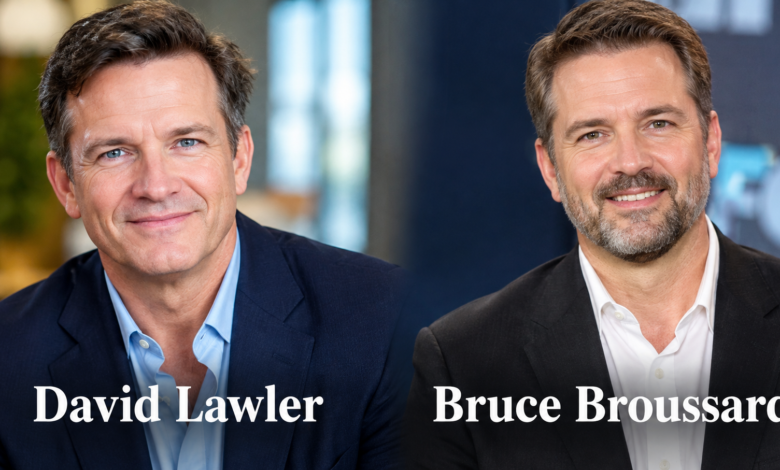
The names David Lawler and Bruce Broussard represent two different stories of executive leadership. Both men have built professional reputations through senior management positions, strategic decision-making, and experience guiding large organizations. However, their careers developed in different industries, and understanding that distinction is essential when researching their backgrounds.
David Lawler and Bruce Broussard is known for his work in the energy sector, including leadership roles connected with oil, natural gas, and liquefied natural gas (LNG). Bruce Broussard, meanwhile, established his reputation in healthcare, particularly through his leadership at Humana, before moving into a senior technology leadership position at HP.
Although their names appear together in online searches, it is important to separate verified information from assumptions. Their professional histories provide an interesting comparison of how experienced executives approach business growth, operational challenges, and organizational change.
This article explores David Lawler and Bruce Broussard individually, covering their career paths, leadership experience, notable achievements, and professional backgrounds. It also examines what is publicly known about their connection and why their different experiences make an informative comparison.
1. Who Are David Lawler and Bruce Broussard?
David Lawler and Bruce Broussard are American business executives associated with major organizations in different economic sectors. Their professional experience includes corporate management, long-term planning, and responsibilities that require balancing business performance with broader industry challenges.
David Lawler and Bruce Broussard has developed his career in the energy industry. His experience includes leadership positions at established energy companies and executive responsibility for businesses involved in natural gas development and LNG infrastructure. His work has centered on managing energy operations, evaluating investment opportunities, and supporting projects that connect energy production with domestic and international markets.
Bruce Broussard has followed a different professional route. He became widely recognized as the former president and chief executive officer of Humana, one of the major health insurance and healthcare services companies in the United States. He joined Humana in 2011 and became CEO in January 2013, holding the position until July 2024.
Broussard’s experience extends beyond traditional health insurance. His career has included financial management, healthcare operations, corporate governance, and organizational transformation. These responsibilities helped establish his reputation as an executive capable of managing businesses operating within complex regulatory environments.
One important distinction is that the two executives should not be treated as members of the same company or business partnership simply because their names appear in the same search query. Their publicly documented careers follow separate paths, with David Lawler and Bruce Broussard associated primarily with energy and Broussard with healthcare and technology leadership.
Their backgrounds nevertheless offer useful lessons for readers interested in executive management. Both careers demonstrate the importance of industry knowledge, financial discipline, and the ability to make decisions when businesses face changing market conditions.
2. David Lawler’s Professional Background
David Lawler and Bruce Broussard professional background is rooted in the energy industry, where technical understanding and business leadership often need to work together. Energy companies manage complicated assets, significant capital investments, and operations influenced by global prices, regulations, infrastructure, and environmental considerations.
David Lawler and Bruce Broussard vcareer has included experience with major energy organizations and leadership positions connected with oil and natural gas production. These roles exposed him to the operational realities of energy development, including production planning, asset management, investment decisions, and the coordination of large teams.
Working in this sector requires more than understanding the market price of oil or gas. Executives must assess the commercial viability of projects, manage operational risks, and consider whether infrastructure will support production over many years. Decisions made today can affect a company’s financial position long after an individual project begins.
David Lawler and Bruce Broussard executive experience has involved these broader business considerations. His work has connected energy production with the strategic planning required to develop and manage substantial industrial assets. That experience is particularly relevant to natural gas projects, where production, processing, transportation, and export infrastructure must operate as part of a coordinated system.
Another important feature of the energy industry is its exposure to changing demand. Economic growth, industrial activity, international trade, and government policy can influence the commercial outlook for natural gas and other energy resources. Senior executives must respond to these developments while maintaining a long-term perspective.
David Lawler and Bruce Broussard professional story is therefore best understood through his work in energy operations and corporate strategy rather than through unsupported personal claims. Reliable company biographies and announcements provide a stronger basis for understanding his career than websites that repeat unverified details about executives.
His background also provides a useful starting point for examining the responsibilities associated with leading an energy business. Such leadership involves balancing immediate operating requirements with investment decisions that may take years to deliver their intended results.
3. David Lawler’s Career in the Energy Industry
David Lawler and Bruce Broussard s career reflects the development of an executive who has worked across different parts of the energy business. His professional history includes leadership experience at companies such as Shell and BP, as well as senior responsibilities associated with Kimmeridge Texas Gas and Caturus.
Experience at established energy companies can provide executives with a broad understanding of how large industrial organizations operate. These businesses must coordinate engineering, finance, safety, commercial planning, and regulatory compliance. Senior leaders are expected to understand how these functions influence one another rather than treating them as separate responsibilities.
David Lawler and Bruce Broussard tenure at BP America is an important part of his professional background. He served as chairman and president of BP America and held leadership responsibilities within the company’s US onshore operations. These positions placed him in a senior role within a major international energy organization, where decisions can involve substantial investments and complex operational priorities.
His subsequent work in natural gas has also been significant. Natural gas businesses require a different combination of commercial planning and infrastructure development from many conventional oil operations. Companies must consider gathering systems, pipelines, processing facilities, transportation agreements, and the availability of markets willing to purchase their output.
David Lawler and Bruce Broussard later became associated with Caturus, an integrated natural gas and LNG business. The company’s strategy involves connecting natural gas production with LNG infrastructure and international energy markets. This approach reflects a broader commercial objective: coordinating different stages of the energy supply chain instead of focusing on production alone.
The importance of this work becomes clearer when considering the investment involved in LNG projects. Export terminals require extensive infrastructure, financing, construction planning, regulatory approvals, and reliable access to natural gas supplies. Executives overseeing these projects must assess risks that can arise from construction delays, changing market prices, and shifting international demand.
David Lawler and Bruce Broussard career illustrates why energy leadership often requires patience as well as decisiveness. Large projects cannot usually be completed through quick decisions or short-term cost reductions. Their success depends on careful preparation, sound investment choices, and the ability to coordinate many organizations over an extended period.
4. David Lawler’s Leadership Role at Caturus
David Lawler and Bruce Broussard Caturus is an important part of David Lawler and Bruce Broussard s more recent professional story. The company focuses on integrated natural gas and LNG development, bringing together elements of the energy value chain that connect gas production with international markets.
An integrated business model can offer commercial advantages when its different components are coordinated effectively. Natural gas must be produced, processed, transported, and delivered to customers. If one stage experiences a delay or capacity problem, the effects can spread throughout the operation. A coordinated strategy can help management identify these dependencies earlier.
David Lawler and Bruce Broussard role as an executive involves the broader strategic challenges associated with developing this type of business. Leadership responsibilities can include setting priorities, assessing investment opportunities, coordinating technical and commercial teams, and communicating the company’s objectives to investors and other stakeholders.
LNG infrastructure also creates opportunities to serve customers beyond the immediate production region. Natural gas that is converted into a liquid can be transported by specialized vessels to markets that cannot easily receive pipeline gas. However, this process requires significant investment in facilities, shipping arrangements, and supporting infrastructure.
For a company pursuing an LNG strategy, financial planning is particularly important. Management must consider the cost of development, the timing of construction, anticipated customer demand, and the possibility that market conditions will change before a project begins operating. These considerations make project evaluation a central part of executive decision-making.
Another challenge is managing expectations. Large energy developments often attract attention because of their potential economic impact, but announced plans and completed projects are not the same thing. Investors and readers should distinguish between proposals, construction milestones, financing announcements, and facilities that have actually entered commercial operation.
David Lawler and Bruce Broussard work at Caturus is therefore relevant to understanding how energy executives approach infrastructure-led growth. His career brings together operational experience and strategic planning in a sector where successful leadership depends on both technical understanding and commercial judgment.
5. Bruce Broussard’s Early Career and Professional Background
Bruce Broussard built his professional reputation through finance, healthcare management, and executive leadership. His career demonstrates how experience gained in financial and operational roles can prepare a professional for responsibilities at the highest levels of corporate management.
Broussard earned a Bachelor of Business Administration degree in accounting and finance from Texas A&M University. He later completed an MBA in finance at the University of Houston. This educational background provided a foundation in financial analysis, business planning, and the management principles that support corporate decision-making.
Finance plays a particularly important role in healthcare organizations. Insurance companies and healthcare service providers must manage substantial operating expenses while responding to regulation, customer expectations, and changes in medical costs. Leaders need to understand how financial performance affects the company’s ability to provide services and invest in future improvements.
Before joining Humana, Broussard held several senior positions at US Oncology. His responsibilities included chief financial officer, chief executive officer, and chairman of the board. Following McKesson’s acquisition of US Oncology, he became president of McKesson’s specialty pharmacy division.
These experiences provided exposure to different aspects of healthcare management. Financial leadership requires attention to budgets and profitability, while operational leadership demands coordination between employees, customers, suppliers, and service providers. Board responsibilities add another dimension by requiring oversight of strategy, risk, and organizational accountability.
Healthcare is also an industry in which business decisions have consequences beyond financial statements. Companies must consider patient needs, service quality, access to treatment, regulatory obligations, and the reliability of their operations. An executive’s ability to balance these responsibilities can influence both business performance and the experience of the people who depend on the organization.
Broussard’s early career helps explain his later move into major corporate leadership. Rather than relying on a single area of expertise, he developed experience across finance, operations, and management. That combination became particularly relevant when he took responsibility for Humana, where financial performance and healthcare delivery were closely connected.
6. Bruce Broussard’s Leadership at Humana
Bruce Broussard joined Humana as president in December 2011 and became president and CEO on January 1, 2013. He remained in the role until July 1, 2024, when Jim Rechtin succeeded him. His tenure lasted more than a decade and covered a period of significant change across the American healthcare industry.
Humana operates in a complex environment shaped by health insurance, Medicare Advantage, medical costs, government policy, and the changing needs of its members. Leading such a company requires an understanding of both financial performance and the practical challenges that influence access to healthcare.
During Broussard’s leadership, Humana emphasized a more integrated approach to healthcare. Rather than concentrating exclusively on insurance coverage, the company increased its focus on connecting insurance operations with care delivery, primary care services, home healthcare, and other health-related offerings.
The logic behind integrated care is relatively straightforward. Insurance coverage helps people pay for healthcare, but the quality and coordination of the services they receive also matter. When healthcare providers and insurers coordinate more effectively, they may be better positioned to identify patient needs, reduce unnecessary duplication, and support improved health outcomes.
Humana also invested in digital capabilities and analytics. Healthcare organizations generate large amounts of information, but collecting data is only useful when it helps improve decisions. Digital tools can support care coordination, identify patterns, and help organizations understand how members use services. These systems must still be managed responsibly, with appropriate attention to privacy, accuracy, and operational reliability.
Broussard’s leadership period also demonstrates the difficulty of managing healthcare costs while maintaining service quality. Insurers face pressure to keep coverage affordable, providers must manage their operating expenses, and patients need access to appropriate care. These objectives can sometimes conflict, making strategic decisions particularly challenging.
His departure from the CEO position in 2024 marked the end of a major chapter in his career. Humana’s succession announcement reflected the company’s transition to new leadership, while Broussard’s subsequent professional activities opened another chapter in his work as a corporate executive. His experience at Humana remains central to understanding his influence in healthcare management.
7. Bruce Broussard’s Move Into Technology Leadership at HP
Bruce Broussard’s professional story did not end when he stepped down as Humana’s CEO. His relationship with HP had begun earlier, when he joined the company’s board of directors in 2021. In February 2026, HP identified him as its interim chief executive officer, bringing his experience in corporate leadership and governance into the technology sector.
HP is a global technology company with operations spanning personal computers, printers, related services, and technology solutions for businesses and consumers. Leading an organization of this kind requires an understanding of changing customer needs, global supply chains, competition, and the commercial impact of technological innovation.
Broussard’s experience may be especially relevant to the management side of this challenge. His background includes financial leadership, digital transformation, board oversight, and the management of large public companies. These skills can be useful across industries, even when the products and services differ considerably.
However, healthcare and technology are not interchangeable businesses. Healthcare organizations must navigate medical costs, insurance rules, patient needs, and complex care systems. Technology companies face different pressures, including product development, manufacturing, distribution, competition, and changes in how people work. An executive moving between these sectors must understand the differences rather than assume that one management approach fits every situation.
The interim CEO designation is also important. An interim chief executive is responsible for providing leadership during a transition, but the appointment does not automatically mean that the person has been selected as the permanent CEO. HP’s official leadership information identifies Broussard as interim CEO, so that distinction should be preserved when describing his role.
Broussard’s appointment illustrates how boards may draw on executives with experience outside their company’s main industry. Skills in governance, financial oversight, organizational change, and stakeholder management can be valuable during periods of uncertainty. Nevertheless, the effectiveness of any appointment depends on the company’s specific circumstances and the decisions made during the executive’s tenure.
His move to HP adds another dimension to his career. After spending many years leading healthcare organizations, he took on a temporary leadership role at a major technology business. This development makes his professional background particularly interesting to readers studying executive mobility and the ways experienced leaders apply their skills in different sectors.
8. David Lawler and Bruce Broussard: Comparing Their Leadership Styles
Comparing David Lawler and Bruce Broussard is useful because it highlights the different demands placed on leaders in energy, healthcare, and technology. Although both have held senior executive responsibilities, their industries require different combinations of technical knowledge, commercial judgment, and stakeholder management.
David Lawler and Bruce Broussard career is closely connected with energy operations and infrastructure development. In this environment, leadership often involves evaluating physical assets, coordinating engineering and commercial teams, and planning investments that may take years to produce returns. Decisions must account for market prices, transportation capacity, safety requirements, and the availability of customers.
Broussard’s experience has centered more heavily on financial management, healthcare services, corporate governance, and organizational transformation. His work at Humana required attention to insurance operations, healthcare delivery, regulatory requirements, and member experience. His subsequent role at HP brings those executive skills into a different commercial setting.
The time horizon for major decisions can also differ. An energy infrastructure project may require years of planning, construction, and operational preparation. Healthcare businesses must manage long-term strategic objectives while also responding to ongoing changes in medical costs, customer needs, and government policy. Technology businesses face their own timelines, particularly when product cycles and competitive pressures require timely decisions.
Risk management is another common theme. Energy executives must consider operational incidents, project delays, commodity-price changes, and financing risks. Healthcare executives must consider medical costs, regulatory compliance, service quality, and data protection. Technology leaders must account for product reliability, supply chains, market competition, and evolving customer expectations.
Despite these differences, several broad management principles apply to both careers. Clear communication, disciplined financial planning, accountability, and the ability to work with experienced teams can support effective leadership in many industries. These principles do not guarantee success, but they provide a foundation for making informed decisions.
The comparison ultimately shows that executive leadership is not a single skill. It is a combination of industry knowledge, practical experience, judgment, and the ability to adapt. David Lawler and Bruce Broussard and Broussard offer different examples of how those qualities can be applied in businesses facing very different challenges.
9. Are David Lawler and Bruce Broussard Related or Professionally Connected?
One of the most important questions associated with this search term is whether David Lawler and Bruce Broussard have a direct relationship. People sometimes search two names together because they have seen them mentioned in the same article, encountered a similar keyword, or want to understand whether the individuals share a professional or personal connection.
Based on the public corporate biographies and career records reviewed for this article, there is no verified public evidence establishing that David Lawler and Bruce Broussard are relatives. Their documented backgrounds describe separate professional histories, educational experiences, and corporate affiliations. This means a family relationship should not be presented as a fact without credible supporting evidence.
The same caution applies to questions about a business partnership. David Lawler and Bruce Broussard career has focused on energy companies and natural gas development, while Broussard’s best-known executive roles have been in healthcare and technology. The available records do not establish a direct business partnership between them.
It is also important not to confuse the possibility of an indirect connection with proof of collaboration. Senior executives may encounter one another through industry events, corporate networks, board activities, or other professional settings. However, such possibilities do not establish that two people have worked together or maintained a meaningful business relationship.
Online articles can sometimes create the impression that two individuals are connected simply by publishing their names in the same headline. Search engines also group material according to the terms people enter, meaning that the appearance of a combined query is not evidence of a personal relationship.
Readers should therefore look for primary sources when investigating this subject. Official company biographies, regulatory filings, board announcements, and credible reporting provide stronger evidence than unsupported claims repeated across websites. If a direct connection becomes documented through reliable sources, the conclusion can be updated accordingly.
For now, the most accurate approach is to treat David Lawler and Bruce Broussard as separate executives whose careers can be compared. Their professional experiences are interesting in their own right, and there is no need to invent a relationship to make the comparison meaningful.
10. Major Career Achievements and Professional Influence
David Lawler and Bruce Broussard have developed their reputations through different forms of executive responsibility. Examining their achievements requires looking at the roles they have held, the organizations they have led, and the challenges associated with their industries rather than relying on vague descriptions of business success.
For David Lawler and Bruce Broussard , one notable part of his career is his experience in senior energy leadership. His work at BP America and subsequent involvement with natural gas and LNG development demonstrate experience in an industry where operational decisions, infrastructure investment, and commercial strategy are closely connected. These responsibilities place considerable importance on planning, coordination, and long-term thinking.
His association with Caturus also highlights the growing significance of integrated energy strategies. Natural gas production and LNG exports depend on multiple stages of the supply chain, and companies must coordinate those stages to compete effectively. Leadership in this area involves managing the commercial relationships and infrastructure needed to bring energy resources to customers.
Broussard’s best-known achievement is his extended leadership of Humana. His tenure as CEO lasted from 2013 until 2024, during which the company emphasized integrated healthcare delivery, digital capabilities, and services intended to support its members. His career also includes senior leadership at US Oncology and McKesson, providing experience across several healthcare business models.
His later appointment as interim CEO of HP represents another important professional development. The position demonstrates how experience in corporate management and board governance can lead to leadership responsibilities outside an executive’s original industry. Whether that experience translates into lasting organizational improvements depends on the decisions made and the results achieved during the appointment.
Their professional influence should ultimately be assessed through verifiable responsibilities and measurable outcomes. Job titles and company affiliations can explain why an executive is notable, but they do not independently establish the success of every decision. A balanced assessment considers both the scope of the role and the evidence available about the organization’s performance.
Taken together, their careers illustrate two different approaches to executive experience. David Lawler and Bruce Broussard background emphasizes energy operations and infrastructure-led business development, while Broussard’s experience emphasizes healthcare management, finance, corporate transformation, and technology leadership. Both offer useful examples of the demands placed on senior executives, even though their professional paths remain distinct.
11. What We Can Learn From David Lawler and Bruce Broussard
The careers of David Lawler and Bruce Broussard offer several lessons for readers interested in business leadership. One of the clearest is that professional experience matters most when it helps an executive understand the practical challenges facing an organization. A strong background can provide useful judgment, but leaders must continue learning as markets and business priorities change.
A second lesson concerns the value of combining technical or industry knowledge with financial understanding. Energy companies must evaluate major infrastructure investments, while healthcare organizations need to manage costs alongside service delivery. In both settings, leaders must understand how operational choices affect financial performance and long-term stability.
Their careers also show why adaptability matters. David Lawler and Bruce Broussard work has involved different parts of the energy industry, while Broussard has held leadership positions across healthcare and technology. Moving between responsibilities or sectors requires executives to recognize which skills are transferable and which areas require new knowledge.
Another important lesson is the need to distinguish strategic plans from completed results. Large projects, corporate transformations, and leadership appointments often attract public attention before their outcomes become clear. Responsible reporting should identify what has been announced, what has been implemented, and what remains uncertain.
Transparency is equally important when researching business leaders. Publicly available information can explain an executive’s career, but it may not reveal every aspect of a person’s private life or professional relationships. Avoiding unsupported assumptions protects accuracy and helps readers understand what the evidence actually establishes.
Finally, their professional backgrounds demonstrate that leadership involves more than making decisions from the top of an organization. Executives depend on employees, specialists, operational managers, and other stakeholders to turn plans into practical results. Effective leadership requires coordination, accountability, communication, and an understanding of the people affected by business decisions.
For anyone researching David Lawler and Bruce Broussard, the most useful takeaway is that their careers are best understood individually before they are compared. Their different experiences offer valuable perspectives on executive management without requiring an unverified personal or professional connection.
Conclusion
David Lawler and Bruce Broussard have built distinct executive careers in industries that play important roles in the American economy. David Lawler and Bruce Broussard professional background centers on energy, natural gas, and LNG development, while Broussard is known for his leadership at Humana and his subsequent appointment as interim CEO of HP.
David Lawler and Bruce Broussard career highlights the challenges of managing energy operations and developing infrastructure that connects natural gas supplies with international markets. His experience at major energy organizations and his leadership role at Caturus illustrate the strategic and operational demands associated with the sector.
Broussard’s career tells a different story. His background in finance and healthcare management helped prepare him for senior positions at US Oncology, McKesson, and Humana. His transition to HP demonstrates how experienced executives can bring corporate management and governance experience into a new industry.
Although their names appear together in online searches, the available public evidence does not establish that they are relatives or direct business partners. Their careers can be compared meaningfully without making unsupported claims about their relationship.
Ultimately, the story of David Lawler and Bruce Broussard is a comparison of two professional paths shaped by different industries, responsibilities, and business priorities. Understanding those differences provides a clearer picture of their careers and offers a practical perspective on leadership, strategic decision-making, and executive experience.
Frequently Asked Questions (FAQs)
Who is David Lawler?
David Lawler and Bruce Broussard r is an American energy executive known for senior leadership roles at BP America and other energy companies. His more recent professional background includes leadership at Caturus, a company focused on natural gas and LNG development.
Who is Bruce Broussard?
Bruce Broussard is an American business executive best known for serving as Humana’s president and CEO from 2013 to 2024. In 2026, he was identified by HP as its interim chief executive officer.
AreDavid Lawler and Bruce Broussard and Bruce Broussard related?
No publicly verified evidence reviewed for this article establishes a family relationship between them. Their documented professional histories are separate, and claims about a personal connection should not be treated as established facts without reliable evidence.
Have David Lawler and Bruce Broussard worked together?
There is no verified public evidence establishing that they served on the same executive team or maintained a direct business partnership. Their principal career paths have developed in different industries.
What industries are David Lawler and Bruce Broussard associated with?
David Lawler and Bruce Broussard is associated primarily with energy, natural gas, and LNG development. Bruce Broussard built his executive reputation in healthcare and later took on an interim leadership role in the technology industry.
Why are David Lawler and Bruce Broussard searched together?
Their names may appear together because readers want to compare their executive careers or investigate whether a relationship exists. A combined search query, however, does not prove that the two individuals are personally or professionally connected.