

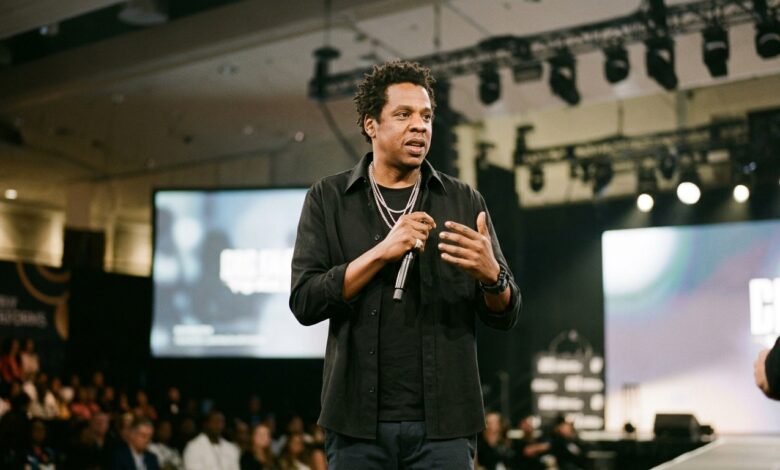
Introduction to Jay-Z
Jay-Z is one of the most influential figures in hip-hop history. Known for his clever lyrics, confident delivery, and remarkable business instincts, he has built a career that extends far beyond music. He is not simply a rapper who achieved commercial success; he is also an entrepreneur, record executive, investor, philanthropist, and cultural figure whose decisions have helped shape the modern entertainment industry.
Born Shawn Corey Carter on December 4, 1969, in Brooklyn, New York, Jay-Z grew up in an environment that later became an important part of his artistic identity. His music often reflects ambition, difficult choices, personal growth, and the pursuit of financial independence. Rather than hiding the contradictions of his life, he has frequently used them as material for songs that explore both success and its consequences.
His professional journey began with a determination to enter the music business on his own terms. After facing obstacles in securing a conventional record deal, he helped establish Roc-A-Fella Records and released his debut album, Reasonable Doubt, in 1996. The project eventually became one of hip-hop’s most respected albums, laying the foundation for a career that would span decades.
Jay-Z’s influence grew through a combination of commercially successful records, carefully chosen collaborations, and an ability to adapt as the music industry changed. Albums such as The Blueprint and The Black Album strengthened his reputation as a lyricist, while songs including “99 Problems” and “Empire State of Mind” introduced his music to audiences well beyond traditional hip-hop listeners.
His business career became another major part of his public identity. Through ventures connected with Roc Nation, fashion, spirits, music streaming, entertainment, and investments, he demonstrated that an artist could build influence outside the recording studio. Forbes estimated his fortune at approximately $2.8 billion in a 2026 profile, although such valuations are estimates rather than audited statements of personal wealth.
In 2026, Jay-Z marked the 30th anniversary of Reasonable Doubt with major performances and celebrations, bringing renewed attention to the music that started his rise. His journey remains a compelling story of artistic ambition, strategic thinking, reinvention, and the long-term impact one person can have on popular culture.
Early Life and Family Background
Jay-Z was born and raised in Brooklyn, New York, and spent much of his childhood in the Marcy Houses public housing development. His upbringing gave him a close view of the challenges experienced by many working-class families in the city. Those experiences later became recurring themes in his music, particularly when he discussed ambition, survival, neighborhood identity, and the desire to build a different future.
His mother, Gloria Carter, played an important role in his life. Jay-Z has spoken about family relationships and personal experiences in songs that reveal a more reflective side of his personality. His relationship with his mother has also extended into philanthropy, as they jointly established the Shawn Carter Foundation to help students access educational opportunities.
Like many young people interested in music, Carter developed his skills by listening closely to other artists and practicing his craft. Hip-hop offered a way to turn observations, memories, and imagination into creative expression. His developing style combined rhythmic control with storytelling, humor, wordplay, and a sharp sense of detail.
Growing up in Brooklyn also shaped his understanding of local culture. New York hip-hop has a long tradition of competitive lyricism, distinctive production, and strong neighborhood identities. Jay-Z absorbed those influences while developing a voice that could move between street narratives, personal reflections, ambitious declarations, and broader observations about society.
His early life was not a simple, predictable path toward fame. Before his music career became established, he faced uncertainty about how to enter an industry dominated by record labels and established performers. That experience contributed to his later emphasis on ownership, independence, and creating opportunities rather than waiting for someone else to provide them.
It is important, however, not to reduce his entire biography to hardship. His upbringing is one part of a much larger story that includes musical talent, professional relationships, business judgment, and the ability to learn from changing circumstances. Understanding his background helps explain the themes in his work, but his later achievements also reflect decisions he made throughout his career.
How Jay-Z Started His Music Career
Jay-Z’s formal recording career took shape in the 1990s, when hip-hop was expanding commercially and developing new regional sounds. He built a reputation through his lyricism and collaborations before establishing himself as a major recording artist. His approach combined a conversational delivery with complex rhymes, internal patterns, and memorable lines that rewarded repeated listening.
One of the most important decisions in his early career was helping create Roc-A-Fella Records with Damon Dash and Kareem “Biggs” Burke. The label gave him a way to release music when the traditional route to a major record deal had not provided the opportunity he wanted. This decision became an early example of the independent mindset that would influence his later business ventures.
In 1996, Jay-Z released Reasonable Doubt, his debut studio album. The record presented a detailed portrait of ambition, risk, loyalty, and the complicated choices surrounding street life. Its production and writing established a tone that was more reflective than a straightforward celebration of success, even when the lyrics were confident and boastful.
Although Reasonable Doubt did not immediately reach the commercial heights of some later albums, its reputation grew over time. Fans and critics came to value its storytelling, carefully constructed verses, and cohesive atmosphere. The album’s lasting reputation was further recognized when it entered the GRAMMY Hall of Fame in 2025, marking its importance in recorded music history. Recording Academy.
His breakthrough became more visible with Vol. 2… Hard Knock Life, released in 1998. The album reached a much larger audience and helped make Jay-Z a household name in hip-hop. Its success demonstrated that he could preserve his lyrical identity while producing music that worked on radio, in clubs, and across a wider commercial market.
These early years established several patterns that would define his career. He treated songwriting as a craft, paid attention to business arrangements, built relationships with influential collaborators, and continued working toward a larger audience. Instead of relying on one successful release, he developed a body of work that could support a long career.
Jay-Z’s Most Important Albums and Songs
Jay-Z’s discography contains numerous projects that have influenced hip-hop’s sound and storytelling traditions. Among the most widely celebrated is Reasonable Doubt, which introduced listeners to his early writing style and the themes that would appear throughout his career. Its restrained production and detailed narratives remain important parts of his artistic identity.
The Blueprint, released in 2001, is another landmark album. Its production, sampling choices, and confident performances helped shape the sound of mainstream hip-hop during that period. The project also reinforced Jay-Z’s reputation for identifying strong collaborators and building albums that felt cohesive rather than like collections of unrelated singles.
The Black Album, released in 2003, was initially presented as a possible farewell to solo recording. Songs such as “99 Problems” and “Dirt Off Your Shoulder” became central parts of his catalog, while the album’s structure reflected an artist looking back on his career and considering what might come next. Its eventual legacy shows how even a planned ending can become another chapter in a longer story.
Jay-Z’s music has also been shaped by major collaborations. His work with Kanye West on Watch the Throne brought together two prominent artists with distinct creative personalities. The project explored wealth, status, ambition, and the responsibilities that accompany success, while its large-scale production reflected the stature of both performers.
“Empire State of Mind,” featuring Alicia Keys, became one of his most recognizable songs. Its celebration of New York connected a personal hometown identity with a broader anthem that audiences could embrace. The track also demonstrated how Jay-Z could work within a more melodic, mainstream format without abandoning the sense of place and ambition that characterized much of his music.
His catalog continued to develop with projects such as 4:44, which offered a more introspective approach to family, money, responsibility, and personal reflection. The album showed a different dimension of his writing, placing greater emphasis on maturity and self-examination. Across these releases, his artistic legacy rests not only on hit records but also on the ability to evolve while maintaining a recognizable voice.
Jay-Z’s Rap Style and Songwriting Ability
Jay-Z is widely recognized for his wordplay, rhythm, and ability to build layered meanings into a verse. His lyrics often reward listeners who return to a song multiple times, because a line that sounds simple at first may contain a second reference, a clever rhyme, or a connection to another part of the song. That density has helped establish his reputation among fans and fellow musicians.
His flow is another defining feature. Rather than relying on one fixed cadence, he often shifts the placement of words against the beat, creating a conversational sound that can suddenly become forceful or intricate. This flexibility allows him to perform over different styles of production while retaining a distinctive presence.
Storytelling also plays a central role in his work. Jay-Z frequently builds songs around recognizable situations, personal decisions, relationships, or the tension between ambition and consequence. The details give his music a narrative quality that can make even highly specific experiences understandable to listeners who have lived very different lives.
Confidence is one of the most visible elements of his artistic persona. Many of his best-known verses celebrate achievement, competitiveness, and self-belief. Yet his catalog also contains moments of doubt, regret, and reflection, demonstrating that confidence and vulnerability can exist within the same body of work.
His writing has influenced a wide range of younger artists, particularly those interested in combining personal storytelling with business-minded perspectives. Jay-Z’s career helped normalize the idea that a rapper could discuss ownership, investments, and long-term financial strategy while remaining firmly connected to hip-hop’s creative traditions.
Songwriting recognition has accompanied his commercial success. In 2017, he became the first rapper inducted into the Songwriters Hall of Fame, a milestone that recognized his contributions to songwriting beyond record sales alone. His work illustrates how hip-hop lyrics can operate as personal narrative, cultural commentary, entertainment, and carefully constructed language at the same time.
Jay-Z’s Business Empire and Entrepreneurship
Jay-Z’s business career is one of the most discussed aspects of his public life. While many musicians concentrate primarily on recording and touring, he has pursued opportunities across entertainment, fashion, beverages, technology, and investment. His approach reflects a long-standing interest in ownership and in building businesses that can continue operating beyond the popularity of an individual song.
Roc-A-Fella Records was an early foundation for this strategy. By helping establish the label, Jay-Z gained greater control over how his music reached audiences and how his career developed. The experience also taught him about distribution, marketing, artist relationships, and the financial structures behind the music industry.
In 2008, he co-founded Roc Nation, an entertainment company that expanded his involvement in artist management, music, sports, and live events. The company works with performers and athletes, helping connect talent with commercial opportunities. Its work on major productions, including the NFL’s Super Bowl halftime show through its partnership with the league, has placed it in a prominent position within entertainment.
Fashion has also been part of his entrepreneurial story. Rocawear, which emerged during the early years of his growing fame, connected his music persona with streetwear culture. Later projects such as Paper Planes continued his involvement in fashion and lifestyle branding. These ventures demonstrate how a recognizable artistic identity can become the foundation for products that reach consumers outside music.
His beverage businesses have attracted particular attention because they illustrate the value of brand building and strategic partnerships. Jay-Z has been associated with Armand de Brignac champagne, often recognized by its “Ace of Spades” branding, and D’USSÉ cognac. Deals involving these brands have helped make his business portfolio a significant part of his financial profile. However, the value of a brand, the value of a stake, and an individual’s liquid wealth are different things and should not be treated as interchangeable.
Jay-Z’s broader business legacy is not simply that he owns multiple companies. It is that he has repeatedly looked for ways to connect cultural influence with commercial opportunity. His career provides a useful case study in how creative work, strategic partnerships, intellectual property, and long-term planning can interact, even though his outcomes reflect circumstances and opportunities that may not be available to every aspiring entrepreneur.
Jay-Z Net Worth and Sources of Wealth
Jay-Z’s net worth has attracted extensive public interest because he is one of the most financially successful musicians in the world. Forbes estimated his wealth at approximately $2.8 billion in its 2026 profile, reflecting the value attributed to his business interests, investments, music catalog, and other assets. This figure is an estimate, not a public accounting of every asset and liability he holds.
Music remains an important foundation of his wealth. Recordings can generate income through streaming, licensing, publishing, performance, and other uses. A successful catalog may continue earning money long after the original release, especially when songs remain culturally relevant or appear in films, television, advertisements, and other media.
Business ownership adds another layer. Stakes in companies can increase in value as a brand grows, attracts customers, or enters new markets. Conversely, businesses can lose value, and an ownership stake may not be easily converted into cash. This is why estimates of wealth often depend on assumptions about company valuations, market conditions, and the size of an individual’s holdings.
Investments also contribute to Jay-Z’s financial profile. Public reporting has connected him with ventures and companies in different sectors, including technology and consumer businesses. A diversified portfolio can create multiple potential sources of growth, but it also carries risks. Private investments may be difficult to value precisely, and publicly traded assets can change price quickly.
It is important to understand the difference between net worth and annual income. Net worth represents the estimated value of assets minus liabilities, while annual income refers to money received over a particular period. A billionaire’s wealth is not necessarily sitting in a bank account; it may be tied up in company shares, intellectual property, real estate, art, or other holdings.
Jay-Z’s financial story is often presented as a simple journey from poverty to billionaire status. That framing captures part of the narrative, but the fuller explanation involves decades of creative work, business negotiations, ownership decisions, partnerships, and calculated risks. His achievements are significant, yet the most useful lesson is the importance of understanding how wealth is created, maintained, and measured rather than focusing on a single headline number.
Jay-Z and Beyoncé’s Marriage and Family Life
Jay-Z’s marriage to Beyoncé is one of the most widely recognized relationships in entertainment. Both have built independent careers with global audiences, and their partnership has drawn attention because of their musical collaborations, public appearances, and shared business interests. Despite their fame, they have generally kept many details of their family life away from public view.
The couple married in 2008. Their relationship has occasionally appeared in their artistic work, allowing listeners to hear different perspectives on love, trust, commitment, and personal growth. Such songs can offer insight into the themes they choose to explore, but artistic expression should not be treated as a complete or literal record of every private event.
They have three children, including their daughter Blue Ivy Carter. Blue Ivy has also begun developing her own public profile through artistic appearances and creative work. The family has occasionally appeared together at major events, although Jay-Z and Beyoncé have made efforts to protect their children’s privacy where possible.
Family has been an important theme in Jay-Z’s later music. His album 4:44, for example, took a more reflective tone than some of his earlier work, exploring responsibility, personal decisions, and the meaning of long-term commitment. It demonstrated how an artist’s priorities and perspective can change over time.
Being part of a high-profile couple can create unusual pressures. Public figures face constant attention, commentary, and speculation, sometimes based on incomplete information. It is therefore important to distinguish confirmed public facts from rumors about private relationships, especially when discussing children or other family members who have not chosen the same level of public exposure.
Jay-Z and Beyoncé’s partnership also illustrates how two successful careers can coexist without becoming identical. Each has an individual artistic identity, business interests, and professional history. Their collaboration adds another dimension to both of their stories, but neither person’s achievements can be fully explained through the other.
Jay-Z’s Awards, Records, and Major Achievements
Jay-Z has received substantial recognition for his work as a recording artist and songwriter. According to the Recording Academy, he has won 25 Grammy Awards from 89 nominations through the 2026 awards cycle. These honors reflect decades of recording, collaboration, and influence across different stages of hip-hop’s development.
One of his most significant milestones came in 2017, when he became the first rapper inducted into the Songwriters Hall of Fame. The recognition highlighted his role as a writer whose contributions extend beyond performance. His songs have helped shape the careers of collaborators and have become part of the broader vocabulary of contemporary popular music.
In 2021, Jay-Z was inducted into the Rock & Roll Hall of Fame. The honor placed his career within a wider history of popular music and recognized hip-hop’s importance as an influential musical tradition. His work has consistently connected rap with other genres, production styles, and forms of cultural expression.
His debut album, Reasonable Doubt, entered the GRAMMY Hall of Fame in 2025. That recognition is particularly meaningful because the album initially had a more modest commercial profile than some of his later releases. Its long-term reputation demonstrates how critical and cultural influence can develop over time rather than being determined entirely by first-week sales.
Jay-Z’s accomplishments also extend into television and live entertainment production. His work connected with Super Bowl halftime shows earned him Emmy recognition, reflecting his involvement behind the scenes as well as his career on stage. His influence is therefore not limited to his own performances; he has also helped shape large-scale entertainment events.
Awards do not settle every debate about the greatest rapper or most influential musician. Fans may prioritize lyrical complexity, innovation, commercial success, cultural impact, or live performance differently. Nevertheless, Jay-Z’s body of work, industry recognition, and continued relevance make him an important figure in discussions about hip-hop’s history and future.
Jay-Z’s Philanthropy and Social Impact
Jay-Z’s philanthropic work is another important part of his public profile. Alongside his commercial ventures, he has supported initiatives involving education, criminal justice reform, and community advocacy. These efforts reflect an interest in addressing structural barriers and creating opportunities for people who may otherwise struggle to access resources.
The Shawn Carter Foundation, established with his mother, Gloria Carter, in 2002, focuses on helping students pursue higher education. Its programs have included scholarships, educational experiences, and support designed to make college more accessible. The foundation reflects a belief that educational opportunity can help people develop their potential and expand their choices.
Education can have a lasting impact because it affects employment options, personal development, and the ability to participate in professional and civic life. Scholarship programs may reduce some of the financial pressure associated with college, while mentoring and development opportunities can help students navigate unfamiliar institutions and career pathways.
Jay-Z has also supported criminal justice reform efforts. Through initiatives associated with Roc Nation and organizations such as REFORM Alliance, he has participated in work aimed at changing aspects of probation and parole systems. These issues are complex and often involve questions about public safety, rehabilitation, fairness, and the long-term effects of incarceration.
Documentary projects have provided another avenue for exploring social issues. Productions associated with Jay-Z have examined subjects such as the criminal justice system and cases that drew public attention to institutional problems. Documentary storytelling can help audiences engage with complicated topics, although viewers should still consider the evidence, perspective, and context presented in each production.
Philanthropy is not a substitute for evaluating every business decision or public position an individual takes. It is, however, a meaningful dimension of a person’s broader impact. Jay-Z’s charitable and advocacy efforts show how a public platform can be used to support educational access, raise awareness, and participate in conversations about social change.
Jay-Z in 2026: Career Highlights and Recent Developments
The year 2026 has been particularly meaningful for Jay-Z because it marks three decades since the release of Reasonable Doubt. The anniversary has offered fans an opportunity to revisit the album that introduced his distinctive blend of storytelling, ambition, and lyrical precision. It has also highlighted how dramatically his career has developed since his early days in Brooklyn.
Roc Nation organized celebrations around the anniversary, including events and performances connected with New York City. The celebrations also recognized The Blueprint, which reached its 25th anniversary in 2026. Together, the milestones offered a chance to consider two influential albums from different stages of his career.
Jay-Z’s anniversary concerts attracted considerable attention because major live performances by him have become less frequent than they were during earlier stages of his career. When he does perform, audiences often come to hear both the familiar songs and the history attached to them. The shows allow listeners to reconnect with music that has accompanied different periods of their lives.
The anniversary performances also demonstrated how his catalog continues to attract collaborators and guests from across hip-hop. These appearances can turn a concert into a wider celebration of the genre’s history, connecting Jay-Z’s career with the artists, producers, and musical traditions that influenced him or developed alongside him.
His professional activities have continued to extend beyond performing. Roc Nation remains involved in entertainment management and large-scale productions, reinforcing Jay-Z’s role as an executive as well as an artist. This dual position is one reason his influence is often discussed in terms of both music and business.
The anniversary is not simply a nostalgic exercise. It provides an opportunity to assess the lasting power of Reasonable Doubt, the evolution of his songwriting, and the business decisions that helped sustain his career. Three decades after his debut, Jay-Z remains a figure whose work invites discussion about artistic longevity, ownership, and the relationship between culture and commerce.
Jay-Z’s Legacy and Influence on Hip-Hop
Jay-Z’s legacy is built on more than the number of albums he has released or awards he has received. He has influenced how many artists think about songwriting, career development, and the possibility of building a business alongside a music career. His example helped make the rapper-as-entrepreneur a familiar part of mainstream entertainment.
His lyrical approach remains an important element of that legacy. The combination of storytelling, wordplay, rhythm, humor, and confident delivery gives his songs a distinctive character. Listeners can appreciate the immediate energy of a track while also discovering new layers in the lyrics over time.
He has also contributed to changing the relationship between hip-hop and corporate business. Through ventures in entertainment, fashion, beverages, and investment, he demonstrated how an artist’s cultural reach could support a broader portfolio. The success of these ventures has helped inspire conversations about ownership and economic independence within the music industry.
His influence is visible in the way modern artists discuss business decisions publicly. Topics such as publishing rights, recording contracts, brand partnerships, and equity stakes are now central to many musicians’ career strategies. Jay-Z was not the only person responsible for this shift, but his achievements helped make these conversations more prominent.
His legacy also includes contradictions and controversies, as is true of many public figures with long careers. Fans and critics may disagree about his music, business choices, public statements, or place in debates about hip-hop’s greatest artists. A balanced assessment should allow room for criticism while recognizing his documented accomplishments and lasting cultural significance.
Ultimately, Jay-Z’s career shows that influence can take many forms. It can come from a memorable song, an album that changes listeners’ expectations, a company that creates opportunities, or an initiative that helps people pursue education. His story continues to matter because it connects artistic expression with questions about ambition, identity, ownership, and the meaning of success.
Frequently Asked Questions About Jay-Z
What is Jay-Z’s real name?
Jay-Z’s real name is Shawn Corey Carter. He was born on December 4, 1969, in Brooklyn, New York. He adopted Jay-Z as his professional name and became one of hip-hop’s most recognized artists.
How old is Jay-Z in 2026?
Jay-Z is 56 years old as of October 2026. He will turn 57 on December 4, 2026.
Who is Jay-Z married to?
Jay-Z is married to Beyoncé, the internationally recognized singer and performer. They married in 2008 and have three children together.
What is Jay-Z’s estimated net worth?
Forbes estimated Jay-Z’s net worth at approximately $2.8 billion in 2026. The figure is an estimate based on reported assets, investments, business interests, and other holdings; it should not be treated as a confirmed cash balance.
What was Jay-Z’s debut album?
Jay-Z’s debut studio album was Reasonable Doubt, released in 1996. It became one of hip-hop’s most respected albums and was inducted into the GRAMMY Hall of Fame in 2025.
How many Grammy Awards has Jay-Z won?
The Recording Academy lists Jay-Z as having won 25 Grammy Awards from 89 nominations through the 2026 awards cycle.
What is Roc Nation?
Roc Nation is an entertainment company co-founded by Jay-Z in 2008. It operates across areas including artist management, sports, music, and entertainment production.
Does Jay-Z have children?
Yes. Jay-Z and Beyoncé have three children, including Blue Ivy Carter. The family generally maintains some privacy despite their international fame.
What businesses is Jay-Z associated with?
Jay-Z has been associated with Roc Nation, fashion ventures, Armand de Brignac champagne, D’USSÉ cognac, music streaming, investments, and other commercial projects. His interests and ownership stakes can change over time.
Why is Jay-Z considered influential?
Jay-Z is recognized for his songwriting, successful albums, business ventures, and role in expanding conversations about ownership in hip-hop. His influence extends beyond recording music into entertainment management, entrepreneurship, and philanthropy.
Conclusion
Jay-Z’s story is a remarkable example of how artistic talent can develop into a lasting cultural and business legacy. From his upbringing in Brooklyn to the release of Reasonable Doubt in 1996, he built a career through songwriting, collaboration, persistence, and a willingness to create opportunities for himself.
His music remains central to his reputation. Albums such as The Blueprint and The Black Album helped define important moments in hip-hop, while his later work revealed a more reflective perspective on relationships, responsibility, and success. His awards and industry recognition reinforce the significance of his contributions to songwriting and popular music.
At the same time, his business ventures demonstrate the possibilities and challenges of building wealth through ownership, partnerships, and long-term planning. His experience shows that a successful music career can open doors in other industries, although every venture carries its own risks and requires its own expertise.
His philanthropic work adds another dimension to the picture, particularly through educational initiatives and criminal justice reform efforts. These activities show how influence can be used beyond commercial entertainment, even as his broader career remains open to public discussion and criticism.
In 2026, the anniversary of Reasonable Doubt offers a fitting moment to look back at the distance between Jay-Z’s beginnings and his current position. His career has changed alongside hip-hop itself, moving from independent record-label ambitions to international recognition and a wide-ranging business portfolio.
Whether people admire him most for his lyrics, albums, entrepreneurship, or cultural influence, Jay-Z remains an important figure in modern music. His legacy is not defined by one song or one financial milestone. It comes from decades of work that have shaped how audiences listen to hip-hop and how artists imagine what their careers can become.