
Satya Nadella and Michel Vounatsos: Leadership, Careers, and Their Impact on the Business World

Introduction
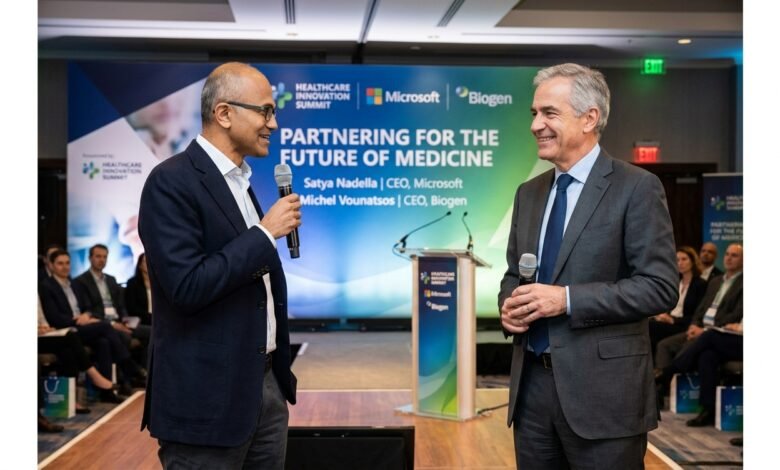
Satya Nadella and Michel Vounatsos are two prominent business executives whose careers illustrate different approaches to leadership, organizational change, and innovation. Satya Nadella and Michel Vounatsosis widely recognized for transforming Microsoft into a cloud-focused technology powerhouse, while Vounatsos is known for his leadership at Biogen, a biotechnology company that develops treatments for serious neurological and neurodegenerative diseases. Although they worked in different industries, their professional experiences offer valuable insights into how executives navigate competition, manage complex organizations, and respond to changing market expectations.
At first glance, comparing a technology executive with a pharmaceutical industry leader might seem unusual. Microsoft builds software, cloud infrastructure, and artificial intelligence tools, whereas Biogen focuses on scientific research, drug development, and medical innovation. However, both organizations depend on long-term planning, significant investment, specialized talent, and the ability to make difficult decisions under pressure.
Their careers also demonstrate that leadership success is rarely determined by a single achievement. A chief executive must balance financial performance with employee expectations, customer needs, regulatory requirements, and broader social responsibilities. Satya Nadella and Michel Vounatsostenure at Microsoft highlights the importance of cultural transformation and technological adaptation. Vounatsos’s time at Biogen demonstrates the challenges of bringing scientific innovation to market while maintaining commercial and financial stability.
This article explores Satya Nadella and Michel Vounatsos, including their backgrounds, professional achievements, leadership styles, major challenges, and lasting influence on their respective industries. It also examines what their experiences can teach aspiring entrepreneurs, managers, and business professionals.
1. Who Are Satya Nadella and Michel Vounatsos?
Satya Nadella and Michel Vounatsos is an Indian-born American business executive who became Microsoft’s chief executive officer in February 2014. Before taking the top position, he spent more than two decades working at the company, developing experience across enterprise software, online services, and cloud computing. His appointment marked an important transition for Microsoft as the company faced increasing competition from mobile platforms, cloud service providers, and changing consumer technology preferences.
Nadella’s leadership is closely associated with Microsoft’s shift toward cloud computing and subscription-based services. Products and platforms such as Microsoft Azure, Microsoft 365, and its enterprise software ecosystem became increasingly important to the company’s strategy. He also emphasized collaboration, accessibility, and a learning-oriented corporate culture, helping reshape how Microsoft approached partnerships and product development.
Michel Vounatsos is a French business executive who served as chief executive officer of Biogen from January 2017 until November 2022. He joined Biogen in 2016 as executive vice president and chief commercial officer before becoming CEO. His professional background includes extensive experience in the pharmaceutical industry, particularly in commercial operations, market development, and international business management.
Vounatsos took charge of Biogen during a period when the company was working to strengthen its position in neurological diseases and manage the commercial challenges facing its existing medicines. His tenure included significant attention surrounding the development and approval of Aduhelm, a controversial Alzheimer’s disease treatment that generated considerable scientific, regulatory, financial, and public debate.
The most important distinction between these executives is their professional environment. Satya Nadella and Michel Vounatsosleads a technology company operating in rapidly evolving digital markets, where software can be updated frequently and services can reach millions of customers. Vounatsos led a biotechnology business in which clinical trials, regulatory approval, safety monitoring, and scientific evidence are central to commercial success.
Despite those differences, both executives were responsible for guiding major organizations through periods of uncertainty. Their experiences provide a useful comparison of leadership across industries where innovation can create substantial opportunities but also carries considerable risk.
2. Early Life, Education, and Professional Background
Satya Nadella and Michel Vounatsos was born on August 19, 1967, in Hyderabad, India. His upbringing combined an interest in technology with exposure to different ways of thinking about society, education, and personal development. As a young student, he developed an interest in cricket, a sport he has discussed in connection with teamwork, discipline, and leadership.
Satya Nadella and Michel Vounatsos studied electrical engineering at Mangalore University before moving to the United States for further education. He earned a master’s degree in computer science from the University of Wisconsin–Milwaukee and later completed an MBA at the University of Chicago Booth School of Business. This combination of technical and business education helped prepare him for executive roles that required an understanding of both engineering and organizational strategy.
Before joining Microsoft, Satya Nadella and Michel Vounatsosworked at Sun Microsystems, gaining experience in the technology industry. He joined Microsoft in 1992, when the company was already an influential force in personal computing. Over the following years, he moved through various positions and gained knowledge of enterprise software, online services, and infrastructure products.
Michel Vounatsos followed a different professional path. His education and early career prepared him for international business management and pharmaceutical commercial operations rather than software engineering. Publicly available professional records and Biogen announcements emphasize his experience in the pharmaceutical industry, particularly his approximately two decades at Merck before joining Biogen.
At Merck, Vounatsos developed experience in commercial strategy, sales, and the management of pharmaceutical products across markets. Working for a major pharmaceutical company can involve coordinating marketing teams, understanding physicians’ needs, responding to regulatory requirements, and managing relationships with healthcare systems. These responsibilities provided a foundation for his later executive work at Biogen.
Their educational and professional histories reveal an important difference in how leaders reach the top of large organizations. Satya Nadella and Michel Vounatsos advanced through a technology company’s internal management structure, developing a deep understanding of its products and engineering culture. Vounatsos brought substantial pharmaceutical commercial experience to Biogen before becoming CEO. Both careers show how specialized knowledge, cross-functional experience, and the ability to manage people can contribute to executive advancement.
3. Satya Nadella’s Rise at Microsoft
Satya Nadella and Michel Vounatsos rise at Microsoft was gradual rather than sudden. During his early years, he worked across business and technology functions, developing the organizational knowledge needed to manage complex products and teams. His progression through leadership roles gave him experience with the company’s enterprise customers and its evolving digital services business.
One of his most important assignments was leading Microsoft’s Cloud and Enterprise group. At a time when companies increasingly wanted computing resources delivered over the internet, cloud infrastructure became a major strategic opportunity. Satya Nadella and Michel Vounatsos helped expand Microsoft’s capabilities in this area, strengthening the foundations of Azure and other enterprise services. Microsoft’s official biography identifies this role as a significant part of his career before becoming CEO.
Satya Nadella and Michel Vounatsos became Microsoft’s chief executive in February 2014, succeeding Steve Ballmer. He inherited a company with established strengths in Windows, Office, and enterprise software but faced serious questions about its future in mobile computing and internet-based services. Competitors had gained momentum in smartphones, consumer platforms, and cloud infrastructure, forcing Microsoft to reconsider some of its traditional assumptions.
Instead of treating Microsoft’s historical products as the only foundation for future growth, Satya Nadella and Michel Vounatsos pushed the company toward a broader cloud-first strategy. Subscription services became increasingly important, while Azure developed into a central platform for businesses seeking computing, storage, databases, and artificial intelligence capabilities. This shift helped Microsoft compete in markets where customers valued flexibility and recurring service improvements.
Satya Nadella and Michel Vounatsos also supported a more collaborative approach to the technology ecosystem. Microsoft expanded its engagement with open-source software and made products and services available across platforms beyond Windows. These moves reflected a practical understanding that customers often use technology from several competing companies. By making Microsoft products useful within broader digital environments, the company could reach customers without relying exclusively on its own operating system.
Another major feature of his leadership has been the emphasis on organizational culture. Satya Nadella and Michel Vounatsos has spoken about empathy, curiosity, and a growth mindset, encouraging employees to learn rather than assume that past achievements guarantee future success. Stanford Graduate School of Business has discussed how these themes informed his approach to leadership and Microsoft’s cultural transformation.
The results of Satya Nadella and Michel Vounatsos tenure have made him one of the most closely watched executives in the technology industry. Microsoft strengthened its position in cloud services, enterprise subscriptions, developer tools, and artificial intelligence. Its expansion has not eliminated competition or business risks, but it has demonstrated how a large company can renew its strategy while drawing on its existing strengths.
4. Michel Vounatsos and His Leadership at Biogen
Michel Vounatsos joined Biogen in 2016 as executive vice president and chief commercial officer. His experience in pharmaceutical sales and international business made him a natural fit for a role focused on bringing medicines to healthcare markets. The position involved commercial planning, product launches, and the challenge of turning scientific developments into treatments that physicians could prescribe and patients could access.
In January 2017, Vounatsos became Biogen’s chief executive officer. The company had established itself as an important player in neuroscience, particularly in treatments for multiple sclerosis. Its research and commercial operations also extended into other neurological and serious medical conditions, creating opportunities for new products while leaving the company exposed to the uncertainty that comes with drug development.
One significant part of his tenure involved expanding Biogen’s work beyond its traditional multiple sclerosis portfolio. The company pursued collaborations, licensing arrangements, and research programs designed to strengthen its pipeline. In a pharmaceutical business, a pipeline refers to medicines being developed and tested at different stages before potential regulatory approval. A diverse pipeline can reduce dependence on individual products, although it cannot remove the risks associated with clinical research.
Biogen also achieved notable product milestones during leadership. The company highlighted the successful launch of Spinraza, a treatment for spinal muscular atrophy developed in collaboration with Ionis Pharmaceuticals, as well as the launch of Vumerity for relapsing forms of multiple sclerosis. These products demonstrated the potential of biotechnology research to address serious medical needs while creating new commercial opportunities.
However, leading Biogen required more than launching successful medicines. Pharmaceutical executives must consider research costs, pricing, insurance coverage, clinical evidence, patient access, and regulatory decisions. Even a medicine that receives approval can struggle commercially if healthcare providers question its benefits or if payers limit reimbursement. These factors make the pharmaceutical industry fundamentally different from the software market.
Vounatsos’s leadership is therefore best understood as a period of both strategic development and significant controversy. Biogen continued investing in neuroscience and expanding its research activities, but its experience with the Alzheimer’s drug Aduhelm became a defining challenge. The episode illustrates how scientific ambition, commercial expectations, regulatory decisions, and public trust can collide in a high-stakes healthcare business.
5. Aduhelm: The Major Challenge of Vounatsos’s Tenure
Aduhelm, whose generic name is aducanumab, became one of the most controversial Alzheimer’s disease treatments in recent pharmaceutical history. Developed by Biogen in partnership with Eisai, the drug targeted amyloid-beta plaques in the brain, a biological feature associated with Alzheimer’s disease. Its development attracted considerable attention because effective treatments that meaningfully slow the progression of Alzheimer’s had long been a major unmet medical need.
The clinical evidence surrounding Aduhelm was complicated. Biogen stopped two late-stage trials in 2019 after an interim analysis indicated that they were unlikely to meet their primary objectives. A subsequent analysis suggested a benefit in one trial, while the other did not demonstrate the same result. This conflicting evidence became central to the debate about whether the treatment provided meaningful clinical benefits.
In June 2021, the US Food and Drug Administration granted Aduhelm accelerated approval based on its effect on amyloid plaques, a surrogate endpoint considered reasonably likely to predict clinical benefit. However, the approval generated substantial criticism from medical experts who questioned whether plaque reduction demonstrated that patients would experience meaningful improvements or slower cognitive decline. The controversy placed Biogen’s leadership under intense scrutiny.
Pricing and access added another layer of difficulty. Aduhelm initially carried an annual list price of approximately $56,000, raising questions about affordability and the evidence supporting such a costly treatment. Biogen later reduced the annual price to approximately $28,000, but the change did not resolve the wider concerns about treatment effectiveness, patient selection, and healthcare spending.
In April 2022, the Centers for Medicare & Medicaid Services restricted Medicare coverage of the treatment largely to qualifying patients participating in clinical trials. This decision severely limited the potential market for Aduhelm in the United States. Biogen subsequently announced substantial reductions in spending on the drug and reorganized its commercial plans, demonstrating how regulatory and reimbursement decisions can change a pharmaceutical product’s prospects.
In May 2022, Biogen announced that Satya Nadella and Michel Vounatsos would step down once a successor was appointed. Christopher Viehbacher was named as his successor in November, with the transition taking effect on November 14, 2022. Although Aduhelm was not the only issue affecting Biogen, its difficult rollout became a central part of the public discussion surrounding Vounatsos’s tenure.
The lesson extends beyond one executive or one medicine. Pharmaceutical companies must balance the desire to address devastating diseases with the responsibility to evaluate clinical evidence carefully and communicate uncertainty honestly. Aduhelm demonstrated that regulatory approval alone does not guarantee widespread medical acceptance, reimbursement, or commercial success. It also showed how rapidly a promising business opportunity can become a major organizational challenge when scientific, financial, and public expectations diverge.
6. Comparing the Leadership Styles of Nadella and Vounatsos
Satya Nadella and Michel Vounatsos approached leadership from different professional backgrounds, yet both had to make decisions involving innovation, organizational priorities, and financial performance. Satya Nadella and Michel Vounatsos experience was rooted in technology development and internal advancement at Microsoft. Vounatsos brought extensive commercial experience from the pharmaceutical sector. Their different starting points influenced the kinds of challenges they faced as chief executives.
Satya Nadella and Michel Vounatsos leadership is often associated with cultural change and long-term strategic adaptation. He encouraged Microsoft employees to remain curious, collaborate across teams, and rethink assumptions about the company’s role in the technology ecosystem. This approach supported a broader shift toward cloud services, cross-platform compatibility, and new digital business models.
Satya Nadella and Michel Vounatsos leadership at Biogen involved navigating the relationship between scientific research and commercial execution. Pharmaceutical companies must invest heavily in medicines that may never reach the market, while also managing established products that generate revenue. This creates a demanding environment in which commercial discipline must coexist with scientific uncertainty and patient needs.
Another difference concerns the speed of innovation. Software companies can often release updates, test new features, and adjust products continuously. Biotechnology companies operate under more restrictive conditions because medicines must pass through clinical development, regulatory review, manufacturing controls, and ongoing safety monitoring. These differences mean that leadership methods cannot be transferred directly from one industry to another without considering the risks involved.
The two executives also illustrate contrasting public narratives. Satya Nadella and Michel Vounatsos leadership is widely associated with Microsoft’s strategic renewal and its strengthened position in cloud computing. Vounatsos’s tenure is more complicated in public discussion because Biogen’s research and product launches were accompanied by the difficult Aduhelm episode. These narratives should not be reduced to a simple comparison between success and failure, since the executives operated under different conditions and had responsibilities across many business areas.
Ultimately, effective leadership depends on understanding an organization’s mission, stakeholders, and operating environment. Satya Nadella and Michel Vounatsos experience highlights the value of adaptability and a culture that supports learning. Vounatsos’s experience highlights the importance of managing scientific and commercial uncertainty, especially when decisions affect patients and public healthcare resources. Both careers reinforce the idea that strong leadership requires more than confidence: it requires sound judgment, accountability, and the ability to respond when circumstances change.
7. Business Strategies, Innovation, and Long-Term Impact
Microsoft and Biogen operate in different industries, but both depend on innovation to maintain their competitive positions. Microsoft invests in software platforms, cloud infrastructure, cybersecurity, developer tools, and artificial intelligence. Biogen invests in scientific research, clinical development, collaborations, and treatments for complex diseases. For both companies, innovation is not simply about producing something new; it is about building capabilities that can support long-term growth.
Under Satya Nadella and Michel Vounatsos , Microsoft’s business strategy increasingly emphasized recurring revenue and integrated services. Microsoft 365, Azure, enterprise security products, and developer platforms became interconnected parts of its business ecosystem. This approach allows customers to use several services together while giving Microsoft opportunities to improve products and develop new offerings over time.
Artificial intelligence has also become a major strategic priority for Microsoft. Its investments in AI infrastructure, developer tools, and Copilot products reflect the company’s effort to incorporate AI into everyday business workflows. These initiatives create opportunities for productivity improvements, but they also bring challenges involving data protection, reliability, infrastructure costs, copyright, and responsible deployment.
Biogen’s innovation strategy is shaped by different considerations. Developing a medicine can take years and require substantial financial investment before its effectiveness and safety are established. As a result, biotechnology companies often rely on partnerships with research organizations and other pharmaceutical businesses to access expertise, share costs, and develop new treatments.
During Satya Nadella and Michel Vounatsos leadership, Biogen highlighted the importance of expanding its neuroscience pipeline and pursuing treatments for diseases with significant unmet medical needs. The company also emphasized partnerships and commercial development as ways to support growth. Its experience with Spinraza showed how a successful treatment could create meaningful opportunities for patients while strengthening a company’s business.
However, the comparison also reveals that innovation requires careful evaluation. Microsoft’s products can encounter market resistance, security failures, or disappointing adoption. Biogen’s medicines face the additional challenge of proving their safety and clinical value through rigorous evidence. In both settings, ambitious strategies must be supported by realistic expectations, strong execution, and the willingness to adjust when results differ from predictions.
8. Lessons Entrepreneurs and Business Leaders Can Learn From Them
One of the clearest lessons from Satya Nadella and Michel Vounatsos career is the importance of adapting before a business becomes irrelevant. Microsoft had powerful products and a strong market position, but those advantages alone could not guarantee future success. Its movement toward cloud computing and subscription services demonstrated why established companies must continue questioning their business models.
Another lesson is that company culture can influence business performance. Satya Nadella and Michel Vounatsos emphasis on learning, collaboration, and empathy helped frame Microsoft’s transformation as more than a change in products. For entrepreneurs, this means encouraging employees to share ideas, challenge assumptions respectfully, and learn from mistakes rather than treating every setback as a personal failure.
Satya Nadella and Michel Vounatsos experience offers a different lesson: innovation must be accompanied by careful risk management. In healthcare, a product’s commercial potential cannot be evaluated separately from clinical evidence, safety considerations, patient access, and regulatory expectations. Business leaders should understand that a promising opportunity can still carry substantial uncertainty.
Both careers also demonstrate the value of strategic partnerships. Microsoft benefited from working across a wider technology ecosystem, while Biogen relied on collaborations to develop and commercialize medicines. Partnerships can provide access to specialized expertise and new markets, but they also require clear responsibilities, realistic expectations, and effective communication.
A further lesson concerns accountability. Senior executives must be prepared to explain major decisions to employees, investors, customers, regulators, and the public. When a strategy encounters difficulties, transparent communication and a willingness to reassess priorities can help an organization respond more effectively. Leaders should evaluate outcomes honestly instead of relying solely on optimistic projections.
Finally, business success should be measured over an appropriate period and against the responsibilities of the organization. A technology company’s performance may be assessed through growth, customer adoption, security, and product quality. A biotechnology company must additionally consider clinical outcomes and the needs of patients. Satya Nadella and Michel Vounatsos careers show that leadership requires balancing commercial objectives with the broader purpose and responsibilities of the business.
9. What Do Satya Nadella and Michel Vounatsos Have in Common?
Although Satya Nadella and Michel Vounatsos led companies in different industries, both managed organizations where innovation was essential to remaining competitive. Microsoft needed to evolve beyond its traditional dependence on desktop computing, while Biogen sought to expand its research and treatment portfolio. Each executive faced pressure to identify opportunities that could sustain the company’s future.
Both also operated in environments shaped by external stakeholders. Satya Nadella and Michel Vounatsos decisions were influenced by customers, software developers, enterprise partners, regulators, and competitors. Vounatsos had to consider physicians, patients, healthcare providers, investors, regulatory authorities, and insurance systems. These relationships affected how their companies developed, launched, and marketed products.
Financial discipline was another shared responsibility. Technology businesses must invest in infrastructure, research, and talent while maintaining profitability. Biotechnology companies face substantial research and development costs, uncertain clinical outcomes, and the possibility that expensive projects will not produce marketable medicines. In both cases, executives must decide where limited resources can have the greatest impact.
Their experiences also show why reputation matters. Customers need confidence that technology products will be useful, secure, and reliable. Patients and healthcare professionals need confidence that medical products are supported by appropriate evidence and safety monitoring. Trust can take years to establish, yet a controversial decision or a major product failure can damage it quickly.
Nevertheless, their careers should not be treated as identical leadership case studies. Satya Nadella and Michel Vounatsos most prominent achievements are associated with Microsoft’s strategic transformation, whereas Vounatsos’s tenure at Biogen included both significant product-development milestones and a highly controversial drug launch. Recognizing these differences creates a more accurate comparison than assigning either executive a simplistic label.
The strongest common thread is the responsibility to make consequential decisions under uncertainty. Every major business strategy involves assumptions about customers, technology, markets, or future outcomes. Effective leaders must test those assumptions, listen to relevant experts, and revise their plans when the evidence changes. That principle applies whether an organization is building AI software or developing a treatment for a serious disease.
10. Frequently Asked Questions About Satya Nadella and Michel Vounatsos
Who is Satya Nadella?
Satya Nadella and Michel Vounatsos is Microsoft’s chairman and chief executive officer. He became CEO in February 2014 after holding several leadership positions at the company, including responsibility for its cloud and enterprise business. His leadership is associated with Microsoft’s expansion in cloud computing, subscription software, and artificial intelligence.
Who is Michel Vounatsos?
Michel Vounatsos is a French business executive best known for serving as Biogen’s CEO from 2017 until November 2022. Before becoming CEO, he worked as the company’s executive vice president and chief commercial officer. His tenure included product launches, efforts to expand Biogen’s neuroscience business, and the controversy surrounding Aduhelm.
Did Satya Nadella and Michel Vounatsos work for the same company?
There is no established public evidence that Satya Nadella and Michel Vounatsos and Vounatsos worked for the same company. Their most prominent executive positions were at Microsoft and Biogen, respectively. Their connection is primarily a comparison of two business leaders who managed innovation and organizational change in different industries.
Why is Satya Nadella considered an influential business leader?
Satya Nadella and Michel Vounatsos is influential because he helped redirect Microsoft toward cloud computing and a more collaborative technology ecosystem. He also emphasized organizational learning and empathy as part of the company’s culture. These changes helped Microsoft strengthen its position in enterprise technology and build new growth opportunities.
What was the biggest challenge during Michel Vounatsos’s tenure at Biogen?
One of the most significant challenges was the controversy surrounding Aduhelm, Biogen’s Alzheimer’s disease treatment. The drug received accelerated FDA approval in 2021, but questions about its clinical benefit, its price, and restricted Medicare coverage undermined its commercial prospects. The episode became a defining issue during Vounatsos’s final year as CEO.
What can business students learn from comparing these executives?
Business students can learn that leadership strategies must reflect the industry, the organization’s purpose, and the risks involved. Satya Nadella and Michel Vounatsos career highlights adaptation, culture, and technological transformation. Vounatsos’s experience emphasizes the complexity of commercializing scientific innovation and the importance of evidence, stakeholder trust, and risk management.
Conclusion
Satya Nadella and Michel Vounatsos offer two different perspectives on executive leadership in large, innovation-driven organizations. Satya Nadella and Michel Vounatsos work at Microsoft illustrates how a company can renew its strategy, embrace cloud computing, and develop a culture that encourages learning and collaboration. His career demonstrates the importance of adapting to market changes while continuing to build on existing strengths.
Vounatsos’s leadership at Biogen highlights the opportunities and challenges of the biotechnology industry. His tenure included important product launches, efforts to expand the company’s neuroscience portfolio, and difficult decisions surrounding Aduhelm. The drug’s controversial approval and disappointing commercial performance underscored the importance of clinical evidence, realistic expectations, patient access, and public trust.
Neither career can be fully understood through a single achievement or setback. Leading a major company involves coordinating people, capital, research, partnerships, and long-term objectives while responding to unpredictable events. The most useful comparison is therefore not about deciding which executive was better, but about understanding how leadership responsibilities change across different business environments.
For entrepreneurs, managers, and students, the broader message is straightforward: successful leadership requires adaptability, accountability, informed decision-making, and a clear understanding of the people an organization serves. Satya Nadella and Michel Vounatsos and Vounatsos demonstrate why innovation matters, but their experiences also show that innovation must be supported by thoughtful execution and responsible judgment.
Ultimately, their professional stories offer a valuable reminder that building a successful organization is a continuous process. Markets evolve, scientific knowledge changes, and customer expectations shift. Leaders who understand these realities are better positioned to navigate uncertainty, learn from difficult decisions, and guide their organizations toward sustainable progress.



One Comment